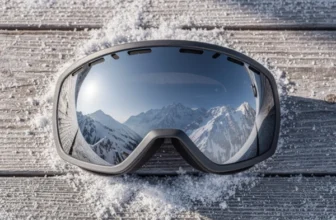

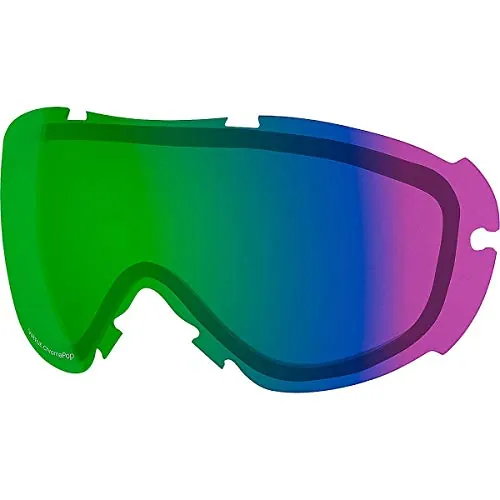
Standing on a mountain peak during a blizzard is intimidating. The world looks like a flat sheet of white paper. When shadows disappear, terrain contours flatten out. Spotting an icy rut or a steep drop-off becomes nearly impossible without the right lens tint.
In this ski goggle lens guide, our alpine desk breaks down Visible Light Transmission. We explain how contrast dyes and dual-pane lenses protect your vision. Picking a lens tint isn’t about fashion. It directly dictates your depth perception, reaction time, and safety on the mountain. If you’re shopping for a new frame, pair this optical guide with our comprehensive rankings of the best ski goggles, and ensure your eyewear interfaces smoothly with the best ski helmets to eliminate gaps and optimize exhaust airflow.
1. Quick Reference: Master Optical VLT & Tint Selection Matrix
The table below breaks down the five universal optical categories recognized by international eyewear standards, matching Visible Light Transmission (VLT) percentages to mountain sky conditions:
| Category | VLT Range | Primary Sky Condition | Recommended Base Tint | Top Manufacturer Examples |
|---|---|---|---|---|
| Category S4 | 3% to 8% | Glacier, High-Altitude Spring Bluebird | Dark Black, Deep Smoke, Heavy Silver Mirror | Oakley Prizm Black, Smith ChromaPop Sun Black |
| Category S3 | 9% to 18% | Bright Sunshine, Bluebird Resort Days | Dark Bronze, Platinum, Green Mirror | Smith Sun Green Mirror, Giro VIVID Onyx |
| Category S2 | 19% to 42% | Variable Light, Partly Cloudy, Afternoon Shadows | Rose, Copper, Everyday Amber, Red Mirror | Oakley Prizm Torch, Smith Everyday Rose Gold |
| Category S1 | 43% to 79% | Storm Snowfall, Dense Fog, Flat Light Whiteout | Light Rose, High-Intensity Yellow, Light Pink | Smith ChromaPop Storm Rose Flash, Oakley Prizm Hi Pink |
| Category S0 | 80% to 100% | Night Skiing, Floodlit Park Riding, Heavy Dusk | Clear, Very Pale Yellow Tint | Smith Clear, Oakley Prizm Clear, Giro VIVID Apex |
❄️ Alpine & Mountain Desk Notes: Alpine & Mountain Desk Notes: The Golden VLT Rule — Why 30% Is Never an All-Weather Solution
Many recreational skiers search for a single ‘do-it-all’ lens, settling on an amber or rose tint with roughly 30% VLT. While a 30% lens handles partly cloudy resort afternoons adequately, mountain lighting is binary. On bluebird Colorado days, sunlight reflecting off snowpack produces blinding glare that causes severe eye fatigue through a 30% lens. Conversely, when a blizzard rolls in and shadows vanish, a 30% lens is dangerously dark, hiding terrain drop-offs and icy moguls. The modern gold standard is a two-lens quick-swap quiver: a low-VLT dark mirrored lens (10% to 15%) for bright sun, and a high-VLT high-contrast rose or yellow lens (55% to 65%) for stormy whiteouts.
2. The Physics of Visible Light Transmission (VLT)
Visible Light Transmission (VLT) measures light passage. It’s the exact percentage of light that travels through a lens to your eyes. VLT runs from 0% to 100% on a simple scale. The lower the number, the darker the lens. The higher the number, the more light reaches your eyes.
UV radiation jumps quickly at high elevation. It climbs roughly 4% for every 1,000 feet of altitude. Plus, clean snowpack reflects up to 80% of incoming sunlight, effectively blasting your eyes with double the radiation you experience at sea level. Riding in bright sun without a dark shield can trigger snow blindness. That’s a painful sunburn on your cornea. Dropping into timber during a storm with a dark lens is dangerous. It cuts visibility and slows your reflexes.
3. Defeating Flat Light & Whiteouts: Wavelength Filtering Technology
“Flat light” happens on overcast storm days. Heavy clouds and fog scatter sunlight in every direction. Light hits the snow from every angle at once. Tiny shadows vanish instantly. Without shadows, the slope looks completely flat, hiding bumps and moguls.
To counteract flat light, alpine lens engineers manipulate color spectrum wavelengths. Our eyes struggle to focus in blue light noise. Scattered blue rays dominate cloudy winter skies. Rose, amber, and yellow lenses act like optical equalizers in storms. They filter out scattered blue haze:
- Filtering Blue Light Noise: Rose and yellow dyes filter out scattered blue rays that create visual static across white terrain.
- Amplifying Warm Reds & Greens: Letting warm red wavelengths pass through boosts color saturation, making subtle texture differences pop vividly against the white snow.
- Subtle Flash Mirror Coatings: Modern low-light lenses (like Smith Storm Rose Flash) add a micro-thin mirrored flash. This deflects irritating surface glare while allowing crucial high-transmission light into your eyes.
4. Lens Curvature Engineering: Cylindrical vs. Spherical vs. Toric
Tint controls light transmission. Meanwhile, lens curvature shapes peripheral vision and airflow:
- Cylindrical Lenses: Curved horizontally across your face while remaining flat vertically. They offer a classic, low-profile freestyle aesthetic at budget-friendly pricing. However, because the lens is vertically flat, peripheral vision is slightly reduced and minor optical glare can appear at the top and bottom perimeters.
- Spherical Lenses: Curved both horizontally and vertically, mimicking the natural spherical radius of the human eyeball. That curve gives you wide panoramic vision. It cuts distortion along the edges. The extra air space inside also stops fog from building up.
- Toric Lenses: The cutting-edge evolution in alpine optics. Toric lenses curve spherically across the horizontal axis with a slightly tighter radius vertically. This hybrid shape provides great peripheral vision. It also keeps a sleek, low-profile fit with your helmet.
5. Proprietary Contrast Technologies Compared (ChromaPop, Prizm & VIVID)
Decades ago, colored ski lenses were simply dyed plastic sheets that dimmed the entire world. According to ASTM F2040 recreational snow sports safety standards, modern optical barriers must maintain impact safety while filtering light. Today, leading optical manufacturers engineer patented light-filtering dyes designed to separate overlapping color wavelengths:
Smith ChromaPop: Our eyes see light in red, green, and blue spectrums. Where red and green overlap, the brain gets confused. That makes terrain look fuzzy. ChromaPop filters out these specific intersection points, sharpening color distinction and depth perception so you’ll be able to spot ice patches instantly.
Oakley Prizm: Oakley used hyperspectral cameras to map alpine light. They analyzed light absorption across hundreds of snowy peaks. Prizm tunes exact color bands. It cuts visual noise while boosting the shades needed to read snow contours.
Giro VIVID by ZEISS: Giro teamed up with optical expert ZEISS. Their VIVID lenses tune blue light instead of blocking it completely. This boosts contrast while reducing eye strain during long ski days.
6. Photochromic / Transitional Lenses: Convenience vs. Cold-Weather Lag
Photochromic ski lenses contain embedded dye molecules that undergo a chemical transformation when exposed to ultraviolet (UV) radiation, darkening automatically in bright sun and lightening in shade. On paper, they promise the ultimate one-lens quiver across shifting mountain skies.
Still, skiers face a major trade-off: temperature lag. Photochromic dyes react slowly in sub-zero cold. In freezing air, lens molecules take longer to shift from dark to light. If you dart from bright sun into dark trees, the lens won’t lighten right away. You’ll ski blind for up to a minute. While convenient for casual resort skiers, dedicated riders still prefer a two-second magnetic lens swap over photochromic transition lag.
❄️ Alpine & Mountain Desk Notes: Alpine & Mountain Desk Notes: The Microfiber Anti-Fog Protocol — Never Wipe an Active Inner Sponge
The inside surface of modern dual-pane ski goggles isn’t bare polycarbonate. It’s coated with a microscopic, hydrophilic chemical sponge engineered to absorb water vapor molecules before they condense into fog droplets. When your goggles fog during heavy exertion, that hydrophilic layer becomes saturated, soft, and gelatinous. If you rub the wet inner lens with a glove, sleeve, or even a dry microfiber cloth, you’ll permanently scrape away the anti-fog coating, leaving permanent streaks that fog instantly forever. If your goggles fog on the hill, don’t wipe them. Pull them away from your face for thirty seconds so ambient mountain airflow can evaporate the trapped moisture naturally.
7. Care, Defrosting & Thermal Gasket Longevity
High-end snow goggles use a dual-pane construction separated by a sealed thermal air spacer and a micro-porous membrane (like Smith’s Porex filter) that equalizes pressure as you ascend chairlifts. Maintaining optical clarity requires disciplined handling:
Room-Temperature Air Drying: When you finish skiing, take your goggles out of your bag. Let them dry naturally at room temperature. Never blast them with car defrosters or set them on radiators. Direct heat warps plastic lenses. It also melts the glue sealing the dual-pane gasket, ruining anti-fog protection.
Storage in Soft Microfiber: Never leave your goggles resting unprotected in a trunk with sharp ski edges or buckle hardware. Always store them inside a clean microfiber pouch or protective hard case. Wash your microfiber pouch periodically in warm water without fabric softener to remove accumulated face oils and trail dust.
Frequently Asked Questions (FAQ)
What VLT percentage is best for flat light and whiteout conditions?
For flat light and storms, pick a lens with 50% to 65% VLT. Light rose, amber, and yellow tints let in plenty of light. They cut scattered blue haze so terrain bumps pop cleanly.
Can I use a polarized lens for downhill skiing?
Polarized lenses work great on water, but they’re risky on snow. They block horizontal glare, which is how you spot sheet ice. Through polarized lenses, sheet ice looks identical to packed powder. That’s why ski optic designers prefer non-polarized lenses on mountains.
What is the difference between spherical, cylindrical, and toric lenses?
Cylindrical lenses curve horizontally while remaining flat vertically, providing a low-profile look at an affordable price. Spherical lenses curve both horizontally and vertically like a human eyeball, maximizing peripheral vision and internal air volume. Toric lenses are a hybrid that curve spherically horizontally with a tighter vertical curve, offering wide panoramic vision with a low-profile fit.
Why do ski goggles have two lenses bonded together?
Modern ski goggles use a dual-pane construction that acts like a double-pane storm window. The outer lens contacts sub-zero exterior air, while the inner lens rests close to your warm face. The sealed air pocket between the two lenses forms a thermal insulator that prevents warm facial moisture from condensing into fog on the freezing outer shield.
What does VLT Category S0 through S4 mean?
The S0 to S4 scale is an international standard classifying optical darkness. S0 lenses (80% to 100% VLT) are clear for night skiing. S1 lenses (43% to 79% VLT) handle storms and flat light. S2 lenses (19% to 42% VLT) manage variable conditions. S3 lenses (9% to 18% VLT) are for bright sun, and S4 lenses (3% to 8% VLT) are for extreme glacier sunlight.