Carving down steep alpine slopes demands precision. Your feet are your main connection to your skis. Stiff boot shells transfer weight shifts directly to your edges. But without the right sock, that stiff plastic leads to trouble. Blistered heels, numb toes, and painful shin bang quickly ruin your day.
In this 2026 ski sock review, our alpine desk breaks down modern foot protection. We examine how technical socks regulate heat, cushion shins, and manage sweat. Old-school thick cotton socks don’t belong on ski mountains. They soak up sweat and freeze. Modern merino socks provide a smooth, wrinkle-free fit. They keep feet warm, dry, and energized all day. If you’re updating your full winter kit, pair your ski socks with our expert recommendations for the best ski gloves, and check out our companion guide to the best ski helmets.
Master Comparison Table: Top Ski Socks at a Glance
The comparison table below evaluates each ski sock’s material blend, cushioning density, anatomical fit features, and price tier:
| Model | Product & Award | Key Spec / Category | Tier | Action |
|---|---|---|---|---|

|
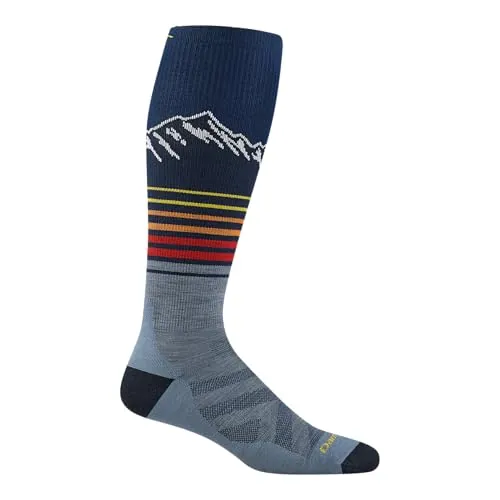
Best Overall Pick / Unconditional Lifetime Guarantee & High-Density Merino Knit Darn Tough Steep Lines Over-The-Calf Ski Socks |
54% Merino Wool, 43% Nylon, 3% Lycra Spandex | Performance Fit | Targeted Shin Cushion | True Seamless Toe | $$ | Check Price » |
|
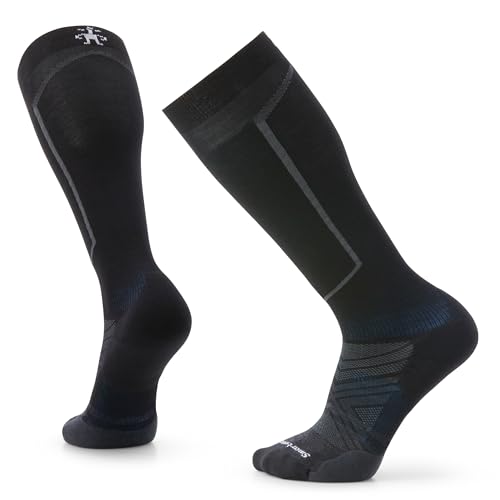
Best Shin Protection / Indestructawool Durability & Body-Mapped Mesh Smartwool Ski Targeted Cushion Over-The-Calf Socks |
Merino Wool Blend | 4 Degree Elite Fit System | Indestructawool Technology | Body-Mapped Mesh Zones | $$ | Check Price » |

|
Best for Endurance & Muscle Support / Graduated Medical-Grade Compression CEP Ski Merino Compression Tall Socks |
20-30 mmHg Graduated Compression | Merino Wool & Synthetic Blend | Left/Right Anatomical Fit | $$$ | Check Price » |

|
Best for Custom Boot Fit / Precision Medium Cushioning & Rapid Wicking Matrix FALKE Men’s SK2 Intermediate Ski Socks |
45% Polypropylene, 20% Acrylic, 20% Wool, 15% Polyamide | 3-Layer Construction | Anatomical L/R Toe | $$$ | Check Price » |
|
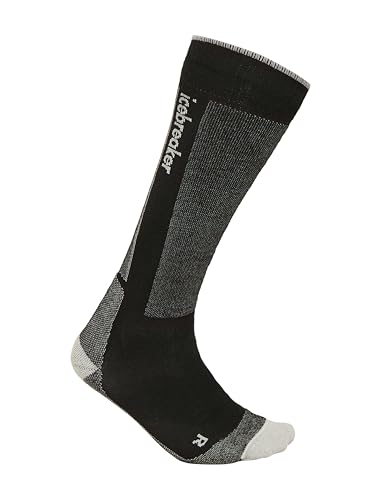
Best Ultra-Light Performance / Pure Merino Breathability for Snug Race Shells icebreaker Merino Ski+ Light Over-The-Calf Socks |
53% Merino Wool, 45% Nylon, 2% Elastane | Sculpted Ankle & Achilles Support | Breathing Zone Forefoot | $$ | Check Price » |
❄️ Alpine & Mountain Desk Notes: Alpine & Mountain Desk Notes: The ‘One Sock Only’ Rule — Why Doubling Up Freezes Your Toes
Wearing two pairs of socks is a huge mistake. Many cold-footed skiers do it thinking it’ll keep them warm. Layering socks causes friction between the fabric layers. That creates bunching and leads to painful blisters. Modern ski boots are built with exact internal volume. There’s very little extra room. Jamming two socks into the shell tightens the boot over the instep, compressing your dorsal pedis artery. This cuts off warm blood flow to your toes. Two socks also trap sweat against your skin. Damp fabric conducts heat away 25 times faster than air. Always wear exactly one pair of socks. Stick with dry, moisture-wicking merino wool over the calf.
In-Depth Ski & Snowboard Sock Reviews & Knit Analysis
Our alpine editorial team evaluated dozens of socks based on merino wool percentage, shin cushioning density, compression fit, and moisture wicking. Below are our in-depth evaluations of the top 5 ski socks for 2026:
Darn Tough Steep Lines Over-The-Calf Ski Socks
Price Tier: $$ | Key Spec: 54% Merino Wool, 43% Nylon, 3% Lycra Spandex | Performance Fit | Targeted Shin Cushion | True Seamless Toe
Knitted in the Green Mountains of Vermont, Darn Tough socks are legendary among ski patrollers and mountain athletes. The Steep Lines Over-the-Calf sock uses a fine-gauge knit blending premium merino wool with resilient nylon and Lycra. It delivers a dialed performance fit that hugs your foot like a second skin, ensuring zero fabric bunching or heel slippage inside stiff ski boot shells. Terry loop cushioning is strategically placed along the shin bone to cushion aggressive forward driving through turns, while the True Seamless toe closure eliminates abrasive rubbing across your toes.
Skiers praise Darn Tough socks for maintaining their elasticity and shape across 40+ days a season without sagging down into boots. Riders love the natural odor resistance of high-percentage merino wool, which lets you wear them on back-to-back ski weekend days without stink. Reviewers consistently highlight the lifetime warranty as the ultimate mark of confidence.
✓ What Works Well
- Backed by Darn Tough’s unconditional lifetime guarantee—if they wear out or develop a hole, replace them free
- High-density fine-gauge merino wool knit resists bunching, slipping, and blistering inside tight ski boots
- Targeted terry loop cushioning across the shin absorbs hard forward boot tongue pressure
⚠ What to Keep in Mind
- Snug performance compression fit can feel tight over wide or muscular calves
- Premium price per individual pair compared to multi-pack synthetic tube socks
Bottom Line: The benchmark performance choice in ski socks, combining blister-free high-density merino wool, protective shin padding, and an unconditional lifetime warranty.
Smartwool Ski Targeted Cushion Over-The-Calf Socks
Price Tier: $$ | Key Spec: Merino Wool Blend | 4 Degree Elite Fit System | Indestructawool Technology | Body-Mapped Mesh Zones
Smartwool pioneered the modern merino wool ski sock, and their Targeted Cushion Over-The-Calf represents decades of refined bootfitting research. Using their proprietary 4 Degree Elite Fit System, it incorporates criss-cross elastic tension bands that anchor the sock firmly around your arch and achilles tendon, preventing downward slippage. Generous protective padding shields your shin from boot tongue abrasions, while body-mapped mesh zones across the forefoot allow heat to escape during warm spring resort afternoons.
Skiers who suffer from painful shin bang rave about Smartwool’s targeted padding for providing plush relief without adding unnecessary bulk under the footbed. Riders report the socks stay comfortably pulled up just below the knee all day without binding uncomfortably at the top welt.
✓ What Works Well
- 4 Degree Elite Fit System uses dual elastic bands to lock the sock firmly around your ankle and arch
- Indestructawool technology reinforces high-abrasion heel and toe areas for extended durability
- Body-mapped mesh ventilation zones exhaust heat from the top of the foot to keep feet dry
⚠ What to Keep in Mind
- Merino wool blend will shed minor fuzzies during the first two machine wash cycles
- Medium-thick shin padding may feel snug inside ultra-tight 98mm low-volume race boots
Bottom Line: A plush, highly protective ski sock that pairs targeted shin shock absorption with precision arch lockdown for all-day comfort on the slopes.
CEP Ski Merino Compression Tall Socks
Price Tier: $$$ | Key Spec: 20-30 mmHg Graduated Compression | Merino Wool & Synthetic Blend | Left/Right Anatomical Fit
When your calf muscles fatigue after charging moguls all morning, blood pools in your lower extremities, causing dull foot aches and cramping. The CEP Ski Merino Compression sock uses graduated compression engineered by German medical giant medi. Compression is firmest at the ankle and gradually tapers toward the knee, promoting venous blood return to your heart. Blending fine merino wool with synthetic fibers, it wicks sweat while wrapping calf muscles tightly to dampen fatigue-inducing muscle vibrations.
Riders and athletes who wear these on long mountain days or ski tour in the backcountry report noticeably fresher legs by late afternoon when wearing CEP. Skiers note that boots feel tighter and more responsive because feet don’t swell inside the boot liners by 3 PM.
✓ What Works Well
- Medical-grade graduated compression enhances calf blood circulation, reducing muscle fatigue on long runs
- Ultra-precise anatomical left and right foot shaping eliminates loose fabric or pressure ridges
- Compression fit prevents foot swelling, maintaining consistent boot lock throughout full ski days
⚠ What to Keep in Mind
- Requires careful rolling technique to pull over heels compared to standard relaxed socks
- Higher price point reflects precision German medical compression engineering
Bottom Line: A high-performance technical sock that combines medical-grade calf compression with merino warmth to fight muscle fatigue and maximize boot responsiveness.
FALKE Men’s SK2 Intermediate Ski Socks
Price Tier: $$$ | Key Spec: 45% Polypropylene, 20% Acrylic, 20% Wool, 15% Polyamide | 3-Layer Construction | Anatomical L/R Toe
In the European Alps, professional bootfitters routinely recommend FALKE socks for their precision engineering. The FALKE SK2 Intermediate strikes an ideal balance between protective padding and direct ski control. It features a three-layer construction using a blend of polypropylene and merino wool that pulls moisture away from skin faster than pure natural fibers. The toe box is knitted with dedicated left and right anatomical angles, ensuring a completely smooth fit around your toes without uncomfortable excess fabric.
Owners who wear these with custom heat-molded boot liners praise the SK2 for its predictable thickness. Reviewers note that feet stay warm not through thick bulky padding, but through rapid sweat evacuation that keeps the skin completely dry inside tight shells.
✓ What Works Well
- Three-layer material structure rapidly transports perspiration away from skin to prevent freezing feet
- Asymmetrical left and right toe box provides an anatomical fit with zero excess material in the toe box
- Medium cushioning density creates balanced power transfer between custom boot liners and ski shells
⚠ What to Keep in Mind
- Lower percentage of natural merino wool compared to Darn Tough or Smartwool models
- European sizing runs slightly narrow for skiers with extra-wide forefeet
Bottom Line: The European benchmark for bootfitting precision, combining rapid three-layer moisture transport with custom anatomical toe shaping.
icebreaker Merino Ski+ Light Over-The-Calf Socks
Price Tier: $$ | Key Spec: 53% Merino Wool, 45% Nylon, 2% Elastane | Sculpted Ankle & Achilles Support | Breathing Zone Forefoot
Modern high-performance ski boots are designed with ultra-snug, low-volume (LV) lasts between 97mm and 98mm. Stuffing a thick padded sock into a precision race shell cramps your toes, cuts off circulation, and dulls your feel for your edges. The icebreaker Ski+ Light is engineered specifically for skiers who demand a second-skin feel. It uses premium New Zealand merino wool with targeted ankle and achilles reinforcement, delivering maximum breathability and precise sensory feedback from snow to boot.
Advanced skiers and racers who wear tight 120+ flex boots love the Ski+ Light for its paper-thin yet warm feel. Riders report that toes stay warmer than in thick socks because blood circulation remains completely uncompressed inside the boot’s toe box.
✓ What Works Well
- Ultra-thin profile is designed specifically for tight-fitting low-volume (LV) and race ski boot shells
- High-percentage New Zealand merino wool provides silky next-to-skin softness and natural odor defense
- Sculpted achilles and ankle support zones lock your heel firmly into the boot’s heel pocket
⚠ What to Keep in Mind
- Minimal cushioning provides less shock absorption for skiers suffering from existing shin abrasions
- Requires careful laundering without high-heat machine drying to maintain fine merino knit
Bottom Line: An ultra-thin merino masterpiece built for aggressive skiers and snug boots who want maximum edge feel without compromising warmth or breathability.
❄️ Alpine & Mountain Desk Notes: Alpine & Mountain Desk Notes: Preventing Shin Bang — Tongue Pressure & Smooth Cuff Alignment
Shin bang occurs when your lower leg repeatedly slams into the front tongue of a loose or ill-fitting ski boot, bruising the periosteum bone lining. While socks with targeted shin cushioning (like Darn Tough and Smartwool) help absorb minor vibrations, shin bang is primarily a fit and lacing issue. When pulling on your ski socks, smooth out every wrinkle across your shin before inserting your foot into the liner. Don’t tuck long thermal underwear pant cuffs down into your ski boot. The folded seam of long johns creates a sharp pressure ridge. It bites into your shin bone with every turn. Pull your base layer pants up above your boot cuff, allowing only your smooth ski sock inside the liner.
Also Considered: Other Popular Ski Socks We Evaluated
During our winter gear audits, our alpine team evaluated dozens of over-the-calf socks across freezing sub-zero Rocky Mountain mornings and sunny spring corn snow. While our five top award picks offer the finest merino wool density, shin protection, and anatomical fit, several well-known socks were closely audited before being edged out:
Why it missed the cut: Features comfortable zoned padding across the shin and heel, but the 100% synthetic microfiber blend holds onto foot odors faster than natural merino wool.
Why it missed the cut: Delivers excellent warmth and durability with Fusion Tech knit, but the looser calf welt can slip slightly down the leg on high-volume calf shapes.
Why it missed the cut: A classic heavyweight cushioned wool sock, but the thick fabric creates excess bulk inside modern snug custom boot shells.
Mountain Footwear Playbook: 5-Pillar Ski Sock Selection Guide
Choosing the best ski socks requires understanding how fiber physics, cushioning profiles, and moisture transport work together inside stiff plastic ski boots. Follow this 5-pillar guide so you won’t have to guess when protecting your feet.
1. Fiber Engineering: Merino Wool vs. Synthetics (Why Cotton is Fatal)
Your choice of sock fiber is the single most important factor determining whether your feet stay warm or freeze on the chairlift:
- The Fatal Flaw of Cotton: Don’t wear cotton socks in ski boots. Cotton is a hydrophilic fiber that absorbs up to 2,700% of its weight in moisture. When your feet sweat, cotton fibers trap the water against your skin, flatten out, and lose all insulating loft. Wet cotton conducts heat away from your skin 25 times faster than air, rapidly freezing your toes. According to ASTM F2040 recreational snow sports safety standards, alpine protection requires thermal stability and rapid moisture dissipation in freezing mountain environments.
- Merino Wool: The undisputed champion of mountain fibers. Merino wool possesses natural crimp that traps insulating micro-pockets of air. Plus, merino is naturally thermoregulating and antimicrobial: it absorbs sweat vapor internally while remaining dry to the touch, preventing smelly bacteria growth and keeping feet comfortable across shifting temperatures.
- Technical Synthetics (Nylon, Polypropylene, Elastane): Technical synthetics add critical tensile strength, shape retention, and lightning-fast moisture wicking. Nylon reinforces high-friction heel and toe zones, while elastane (Lycra) provides memory stretch that stops socks from bunching around your ankles.
2. Cushioning Densities: Ultra-Light vs. Targeted Shin vs. Heavy Cushion
Matching sock cushioning to your ski boot fit’s essential for both comfort and ski control:
- Ultra-Light (Zero Cushion): Designed for advanced skiers, racers, and anyone with custom-molded, tight-fitting low-volume (LV) boots (exemplified by the icebreaker Ski+ Light). Ultra-light socks offer a second-skin feel with zero bulk, maximizing edge sensitivity and preventing tight boots from constricting foot blood flow.
- Targeted Cushion: The most popular and versatile category for resort skiers (featured on Darn Tough Steep Lines and Smartwool Targeted Cushion). These socks feature plush terry loop padding along the shin bone to cushion boot tongue pressure, with thin, unpadded fabric across the forefoot and arch to preserve boot fit.
- Medium to Heavy Cushion: Best suited for skiers with older, packed-out boot liners that have developed extra interior space, or recreational skiers renting boots that feel slightly loose around the ankles.
3. Over-the-Calf (OTC) Height & Seamless Construction
All ski socks must feature over-the-calf height. They should rise above your boot liner and sit below the knee. A shorter sock slips down into your boot. Then the stiff plastic liner rubs against bare skin, causing raw blisters.
Look for socks with elastic ribbed tops. They stay up securely without pinching your calf. Demand a flat seamless toe box like Darn Tough’s True Seamless. It stops blisters in cramped toe areas. Traditional bulky toe seams bunch up in the cramped toe box of a ski boot, creating agonizing pressure points across your toenails.
4. Price-Tier Reality Check ($, $$, $$$, $$$$)
Understanding the pricing architecture of ski socks ensures you invest in gear that lasts multiple seasons:
- Entry-Level Synthetic ($): Basic synthetic tube socks. They wick moisture better than cotton, but they lack anatomical arch support, lose elasticity quickly, and tend to sag into boots after a few washes.
- Core Performance Merino ($$): Industry leaders like Darn Tough and Smartwool represent the sweet spot of value and performance. You get high-percentage merino wool, targeted shin padding, anatomical arch wraps, and unbeatable durability backed by lifetime guarantees.
- Medical Compression & Precision European ($$$): Specialized high-end socks like CEP Compression and FALKE SK2 represent the pinnacle of technical footwear. You get graduated medical-grade circulation support, anatomical left/right toe shaping, and multi-layer moisture transport systems built for 60-day seasons.
5. Laundry Care, Odor Prevention & Longevity Protocols
High-grade merino wool ski socks can easily last for years if washed properly:
Turn Inside-Out for Washing: Always turn your ski socks inside-out before washing. It makes a big difference. Water and detergent flush sweat salts directly out of the loops. That rejuvenates the soft cushion.
Cool Wash & Never Machine Dry Hot: Machine wash on a gentle cycle in cool water. Use standard laundry detergent. Don’t use fabric softeners or bleach, which coat merino wool fibers and destroy their natural moisture-wicking and odor-resistant abilities. Hang your socks dry or tumble dry on low heat. High dryer heat shrinks wool and ruins elastic bands.
Frequently Asked Questions (FAQ)
Why shouldn’t I wear thick socks in ski boots?
Thick socks take up too much room inside boots. They squeeze your foot and pinch blood flow. That makes your toes colder, not warmer. Thick socks also bunch up around ankles. They create blisters and dull your control on snow.
Are merino wool ski socks better than synthetic socks?
Yes. Merino wool is naturally thermoregulating, meaning it keeps your feet warm in freezing weather without overheating them when you walk into the lodge. Merino absorbs sweat vapor internally while staying dry to the touch. Natural antibacterial properties also prevent smelly foot odors.
What causes shin bang when skiing?
Shin bang happens when your leg hits the boot tongue repeatedly. It’s caused by a loose boot fit. It can also be triggered by tucking long underwear seams into your ski boots, which creates an agonizing pressure ridge. Targeted shin padding cushions impacts. Pulling long underwear above the boot cuff stops painful bruising.
Can I wear ski socks for snowboarding?
Yes. Ski socks and snowboard socks are virtually identical in construction, featuring over-the-calf height, moisture-wicking merino wool or synthetic fibers, and seamless toe closures. Snowboarders benefit from the same shin cushioning, arch support, and blister protection as alpine skiers.
How many pairs of ski socks do I need for a week-long ski trip?
Because high-quality merino wool naturally resists bacterial odors, you don’t need a fresh pair for every single day. For a week-long ski trip, three to four pairs of high-quality merino ski socks are plenty. Simply hang up your worn pair to air-dry at room temperature between ski days.