
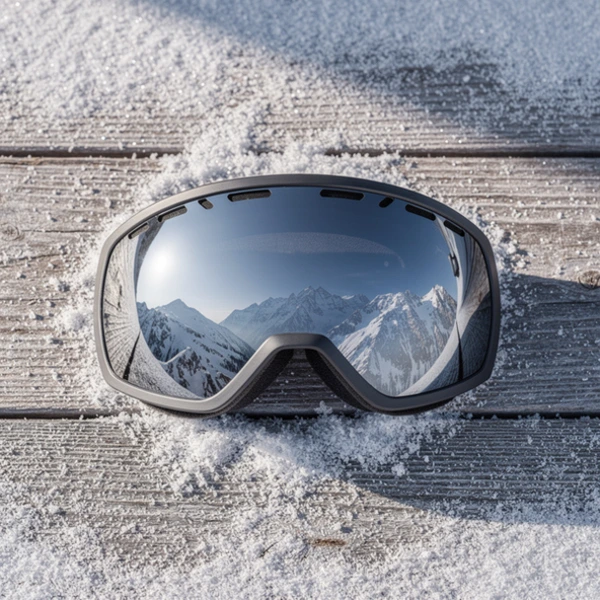
When descending a mountain at speed, your goggles are your main shield. They aren’t just winter gear. They protect your eyes from UV rays, sub-zero wind, and flying ice. They also map subtle changes in snow drifts and ice patches before you hit them.
In this 2026 ski goggle review, our alpine desk evaluates how modern snow goggles protect your vision. Frustrating snap-in channels have given way to magnetic quick-swap lenses. Modern spherical and toric shapes eliminate distortion. High-contrast dyes (like Smith ChromaPop, Oakley Prizm, and ZEISS VIVID) turn whiteouts into clear terrain maps. Below, we break down the top ski and snowboard goggles for 2026 across every budget and riding style. If you are outfitting your complete winter setup, pair your eyewear with our expert recommendations for the best ski helmets, and explore our in-depth optical analysis in the ski goggle lens colors and VLT guide.
Master Comparison Table: Top Ski & Snowboard Goggles at a Glance
The comparison table below evaluates each goggle’s optical lens technology, interchange mechanism, field of view, and price tier:
| Model | Product & Award | Key Spec / Category | Tier | Action |
|---|---|---|---|---|

|
Best Overall Pick / Most Reliable All-Mountain Contrast & Quick-Swap System Smith I/O MAG Snow Goggles |
ChromaPop Spherical Lens | Dual Magnetic Locking Levers | Includes 2 ChromaPop Lenses | $$$$ | Check Price » |

|
Best Peripheral Vision & Fighter-Pilot Spherical Field of View Oakley Flight Deck M / L Snow Goggles |
Prizm Spherical Lens | Rimless Sub-Frame Architecture | Ridgelock System | OTG Compatible | $$$$ | Check Price » |

|
Best Budget Pick / Unbeatable Magnetic Interchange Value OutdoorMaster PRO Ski Goggles |
Interchangeable Magnetic Spherical Lens | 8 Rare-Earth Magnets | OTG Design | 100% UV400 | $$ | Check Price » |
|
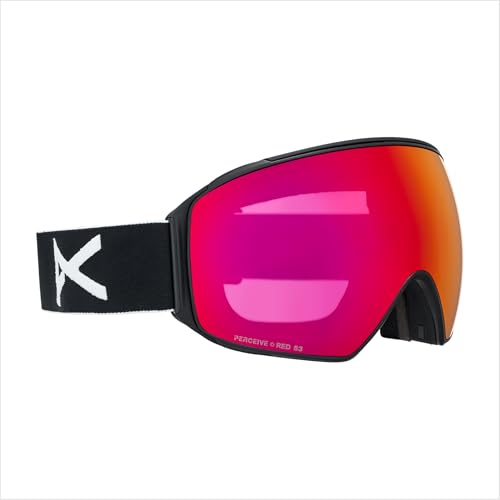
Best Premium System / Seamless Magnetic Lens & Face Mask Integration Anon M4 Snow Goggles |
Magna-Tech 9-Point Magnetic System | Perceive High-Contrast Optics | MFI Magnetic Face Mask | Toric Lens | $$$$ | Check Price » |

|
Best Low-Light Storm Clarity & Anti-Fog EVAK Ventilation Giro Article II Snow Goggles |
VIVID Toric Lens with Optics by ZEISS | EVAK Vent Foam | Slash Seal Lens System | Includes 2 VIVID Lenses | $$$ | Check Price » |
❄️ Alpine & Mountain Desk Notes: Decoding Visible Light Transmission (VLT) — Why One Lens Never Rules the Mountain
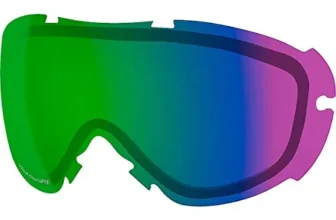
Losing track of moguls and terrain contours is a common mountain frustration. The culprit is almost always the wrong Visible Light Transmission (VLT) percentage. VLT measures the light that passes through your lens to your eyes. A dark, mirrored lens with 10% to 15% VLT shields your eyes on sunny days. But it blinds you in flat light. A storm lens with 50% to 70% VLT brightens snowy whiteouts. But you’ll squint in pain when clouds part. Don’t settle for a single lens. Pick a goggle with quick-swap magnetic lenses (like Smith I/O MAG or Anon M4). That way, you can switch tints on the chairlift in under 10 seconds as weather shifts.
In-Depth Ski & Snowboard Goggle Reviews & Optical Analysis
Our alpine editorial team evaluated dozens of leading frames based on optical clarity, lens swap mechanisms, anti-fog ventilation, and rider feedback across varying mountain conditions. Below are our in-depth evaluations of the top 5 ski and snowboard goggles for 2026:
Smith I/O MAG Snow Goggles
Price Tier: $$$$ | Key Spec: ChromaPop Spherical Lens | Dual Magnetic Locking Levers | Includes 2 ChromaPop Lenses
When charging down an alpine bowl at high speed, your eyes need to read snow texture fast. Wind-blown crust and hidden ice patches can catch you off guard. The Smith I/O MAG remains the gold standard in alpine snow vision. It uses Smith’s ChromaPop lens tech to filter light where the eye causes color confusion. This delivers crisp contrast and depth across varied snowpack. The magnetic MAG system features mechanical locking levers on both flanks. Swapping between the bright-sun and low-light lenses takes under ten seconds on a freezing chairlift. The dual locking levers keep the lens locked tight, even during an unexpected tumble.
Skiers and riders logging 30+ days a season consistently praise the I/O MAG for its reliable anti-fog defense. The 5X inner lens coating and Porex filter prevent moisture buildup during sweaty bootpacks or rainy resort mornings. Mountain athletes love that it ships with two ChromaPop lenses right in the box. This makes it an all-weather quiver of one that handles bright Colorado sun and stormy Vermont blizzards with equal clarity.
✓ What Works Well
- Industry-leading ChromaPop lens technology separates overlapping color wavelengths to reveal subtle snow ripples and ice patches
- MAG magnetic swap system with dual mechanical lock levers ensures the lens won’t eject during high-speed crashes
- Comes standard with two performance ChromaPop lenses (one bright sun, one storm/low-light)
⚠ What to Keep in Mind
- Premium price point represents a significant upfront mountain gear investment
- Medium fit profile may feel slightly snug for riders with extra-large facial profiles (large faces should look at I/O MAG XL)
Bottom Line: The undisputed benchmark in all-mountain vision, offering unmatched ChromaPop terrain contrast, bulletproof magnetic lens retention, and flawless anti-fog reliability.
Oakley Flight Deck M / L Snow Goggles
Price Tier: $$$$ | Key Spec: Prizm Spherical Lens | Rimless Sub-Frame Architecture | Ridgelock System | OTG Compatible
Inspired by the sweeping bubble visors of fighter jets, the Oakley Flight Deck delivers a massive field of view. Oakley eliminates the outer rim and floats a Plutonite spherical lens over a streamlined sub-frame. This removes peripheral blind spots so you can spot downhill skiers and tree branches without turning your neck. Powered by Oakley’s Prizm Snow optical tech, the lens boosts contrast across key snow wavelengths. It turns flat, gray snowfields into clearly mapped terrain contours.
Freeriders love the Flight Deck for its panoramic viewing window and plush triple-layer face foam that blocks cold gales. Glasses-wearers appreciate that the deep internal volume fits comfortably over prescription frames without pinching nose bridges. The Ridgelock channel swap is slower than magnetic systems. However, long-term owners emphasize that its exceptional peripheral awareness and optical clarity make it a permanent resort favorite.
✓ What Works Well
- Iconic rimless frame inspired by fighter pilot helmet visors provides massive, uninterrupted peripheral vision
- Prizm Snow lens tuning highlights microscopic snow drifts, moguls, and icy terrain variations
- Generous interior volume with discreet frame notches easily accommodates prescription eyeglasses (OTG)
⚠ What to Keep in Mind
- Mechanical Ridgelock lens swap system requires manual finger pressing and is slower than pure magnetic designs
- Premium price and usually ships with only a single lens, requiring separate purchase of a dedicated storm lens
Bottom Line: The gold standard for riders who demand maximum peripheral vision and unmatched optical definition from a sleek, rimless frame.
OutdoorMaster PRO Ski Goggles
Price Tier: $$ | Key Spec: Interchangeable Magnetic Spherical Lens | 8 Rare-Earth Magnets | OTG Design | 100% UV400
For recreational skiers, weekend family trips, and budget-conscious riders, dropping big money on goggles can be tough. The OutdoorMaster PRO delivers genuine high-end performance at a fraction of the cost. You get an 8-magnet quick-swap lens system and true dual-pane spherical optics. The magnetic hold lets you pop off a sunny mirrored lens and click in a low-light storm lens in three seconds flat. Equipped with full 100% UV400 protection and dual anti-fog coatings, it provides crisp vision without draining your wallet.
Everyday skiers and parents rave about the OutdoorMaster PRO’s value. The magnetic swap mechanism works as smoothly as systems costing four times as much. Reviewers highlight the comfortable OTG fit, noting that glasses wearers rarely feel temple pressure. Its optical contrast in thick whiteouts does not quite match ChromaPop or Prizm. Still, casual and intermediate skiers agree it is the smartest pound-for-pound goggle value in snowsports.
✓ What Works Well
- 8 strong rare-earth magnets allow instantaneous lens swaps on the chairlift for a fraction of competitor prices
- Expansive over-the-glasses (OTG) fit accommodates standard prescription frames comfortably
- Affordable replacement lenses in dozens of VLT tints make building an all-weather lens kit accessible
⚠ What to Keep in Mind
- Optical contrast in heavy flat-light whiteouts doesn’t quite match proprietary Prizm or ChromaPop lenses
- Lacks mechanical locking tabs, meaning severe, high-speed faceplant crashes can occasionally pop the lens free
Bottom Line: An unbeatable value that brings magnetic lens-swapping and dual-pane spherical optics to everyday skiers and families at an accessible price.
Anon M4 Snow Goggles
Price Tier: $$$$ | Key Spec: Magna-Tech 9-Point Magnetic System | Perceive High-Contrast Optics | MFI Magnetic Face Mask | Toric Lens
Anon engineered the M4 to be the most seamless vision system on snow. At its heart is Magna-Tech: an array of 9 rare-earth neodymium magnets. They exert 16.5 pounds of retention force, snapping the lens into place with a crisp click that stays secure in rough chop. Anon’s crowning feature is MFI (Magnetic Facemask Integration). Four magnetic contact points seal the included thermal face mask directly to the frame. It’s built to seal out sub-zero winds while venting breath downward, preventing moisture from fogging your lens.
Sub-zero resort skiers in harsh climates praise the Anon M4 and its magnetic mask as a major winter breakthrough. Riding in 10-degree chairlift gusts without cold air gaps or fogged lenses makes cold ski days far more enjoyable. Riders also praise the clarity of Anon’s Perceive lenses, noting they don’t miss subtle changes between soft powder and firm wind crust across changing light.
✓ What Works Well
- Magna-Tech system uses 9 rare-earth magnetic connection points with 16.5 lbs of retention force for rock-solid swaps
- Includes integrated Magnetic Facemask Integration (MFI) that snaps the included thermal face mask directly to the bottom frame
- Ships complete with two high-contrast Perceive lenses and a compression-molded protective hard case
⚠ What to Keep in Mind
- Top-of-the-market price point represents a serious investment for hardcore snowsports enthusiasts
- Powerful magnets require caution around credit cards and delicate electronics in resort pockets
Bottom Line: The ultimate luxury all-weather snow goggle system, marrying effortless 9-point magnetic lens swaps with the finest magnetic anti-fog face mask integration on earth.
Giro Article II Snow Goggles
Price Tier: $$$ | Key Spec: VIVID Toric Lens with Optics by ZEISS | EVAK Vent Foam | Slash Seal Lens System | Includes 2 VIVID Lenses
When heavy snowfall and thick alpine clouds roll in, standard gray lenses flatten the mountain into a sheet of white. The Giro Article II fights flat-light vertigo with VIVID lens technology, developed with ZEISS optics. By amplifying contrast-enhancing blue light while blocking haze, VIVID lenses reveal snow tracks and drop-offs that ordinary goggles miss. Giro’s EVAK vent tech uses a non-absorbent foam membrane. It lets trapped humidity escape while keeping wet snow spray out, so the lens stays clear in brutal storms.
Pacific Northwest and storm skiers praise the Giro Article II for its fog resistance in wet, coastal snow. Riders note that EVAK foam never gets soaked or frozen with ice, ensuring steady airflow through the top vents. Riders also appreciate the toric lens shape. It provides the broad vision of a spherical lens with the sleek profile of a cylindrical frame.
✓ What Works Well
- VIVID lens technology developed with ZEISS optics enhances contrast by manipulating blue light while blocking harmful UV rays
- Ultra-durable EVAK vent technology uses a non-absorbent foam membrane that releases moisture while shielding out snow spray
- Toric spherical-cylindrical hybrid lens curvature mimics the natural shape of the human eye for zero optical distortion
⚠ What to Keep in Mind
- Slash Seal perimeter press-fit system takes slightly more finger dexterity to swap than pure magnetic frames
- Frame strap silicone grip is very sticky, requiring deliberate adjustment when seating onto textured helmets
Bottom Line: A storm-ready optical specialist engineered with ZEISS optical science and EVAK vents that keep you shredding through dense flat light and heavy snow.
❄️ Alpine & Mountain Desk Notes: The Anti-Fog Golden Rules — Why You Must Never Wipe a Wet Inner Lens
Rubbing the inside of a snow goggle on a chairlift with a snowy glove ruins good eyewear. The inner lens is made of soft cellulose acetate. It has a coating that absorbs moisture droplets. When the lens is wet, that layer gets soft. If you wipe it with a glove or sleeve, you’ll scrape away the coating. That creates a cloudy, ruined lens. If snow gets inside, shake out the loose crystals. Let the airflow on your next run dry it out, or dab it gently with a dry microfiber cloth in the lodge. Never wipe across a wet inner lens!
Also Considered: Other Popular Ski Goggles We Evaluated
During our winter gear audits, our alpine editorial team evaluated dozens of goggles across resort and backcountry categories. While our five top award picks offer the finest optical contrast, helmet sealing, and anti-fog ventilation, several well-known goggles were closely analyzed before being edged out:
Why it missed the cut: Features a classic cylindrical retro design with razor-sharp Prizm lens contrast and great helmet integration, but peripheral vision is noticeably narrower than spherical or toric lenses like the Flight Deck and I/O MAG.
Why it missed the cut: Offers an expansive frameless field of view with crisp Vivid optics by ZEISS, but the magnetic quick-change release tab is recessed and harder to manipulate with thick insulated ski mittens.
Why it missed the cut: An affordable entry-level ski goggle with decent anti-fog venting for casual resort skiers, but single-layer face foam degrades more rapidly in wet snowfall and lens contrast flattens in heavy overcast whiteout conditions.
Why it missed the cut: Delivers vibrant Happy lens tint contrast and a secure deadbolt magnetic locking system, but the oversized frame profile creates minor forehead gaps with compact or low-profile ski helmets.
Mountain Vision Playbook: 5-Pillar Ski Goggle Selection Guide
Riding in high-altitude mountain environments requires understanding how optical physics, lens geometry, and ventilation work together under cold temperatures. Follow this 5-pillar guide so you won’t have to guess when investing in mountain eyewear.
1. Lens Geometry: Cylindrical vs. Spherical vs. Toric
The shape of your goggle lens dictates your peripheral vision, optical distortion, and internal air volume:
- Cylindrical Lenses: Curved horizontally across your face while remaining flat vertically. They provide a retro freestyle look at a budget-friendly price. They offer slightly less vertical vision, and you’ll notice minor glare at the top and bottom edges.
- Spherical Lenses: Curved both horizontally and vertically, mimicking the shape of the human eyeball. This curvature creates greater internal volume between the lens and your face. The extra room reduces fogging while maximizing peripheral and downward vision. Models like the Smith I/O MAG and Oakley Flight Deck use spherical designs for edge-to-edge optical clarity.
- Toric Lenses: A modern hybrid in alpine optics (featured on the Anon M4 and Giro Article II). Toric lenses curve spherically across the horizontal axis with a tighter vertical curve. This shape gives you the wide view of a spherical lens with the sleek, low-profile fit of a cylindrical frame.
2. Terrain & Lighting Archetype: Decoding VLT Tints
Visible Light Transmission (VLT) is the percentage of light that passes through your lens to your eye. Mountain conditions change quickly, and matching your VLT to the sky is essential for safety:
- Bluebird & Bright Sun (VLT 8% to 18%): High-altitude sun reflecting off snow creates intense glare that tires your eyes. Dark gray, bronze, or mirrored lenses filter out excess light. They’ll keep your eyes safe from harsh alpine UV rays.
- Variable & Mixed Conditions (VLT 20% to 40%): For partly cloudy resort days when the sun ducks behind clouds, rose, copper, or amber tints enhance contrast. Tints like ChromaPop Everyday Green or Prizm Torch brighten your path when shadows fall across the trail.
- Storm, Fog & Flat Light (VLT 50% to 75%): In dense snowfall or cloudy whiteouts, shadows disappear and the snow looks flat. High-VLT yellow, clear, or light pink lenses amplify available light so you won’t ski blindly into moguls or drop-offs.
3. Helmet Integration, OTG Compatibility & Face Seal Ergonomics
Your goggles and helmet must function as a synchronized unit. When trying a new frame, check that there is zero gap between the top rim of your goggle and your helmet brim. Skiers call this gap the “gaper gap.” It leaves your forehead exposed to freezing wind. It’ll also disrupt the exhaust airflow channeled from the top goggle vents through the helmet’s intake ports, causing premature fogging. According to ASTM F2040 recreational snow sports safety standards, consistent helmet retention and shell alignment depend on a flush, snag-free interface with your protective eyewear.
If you wear prescription eyeglasses, verify that the goggle is rated for Over-The-Glasses (OTG) use. Frames like the Oakley Flight Deck and OutdoorMaster PRO feature subtle notches in the side foam. These cutouts let eyeglass temples pass through comfortably without pressing frames painfully against your temples or nose bridge.
4. Price-Tier Reality Check ($, $$, $$$, $$$$)
Understanding the pricing architecture of ski eyewear ensures you get the right blend of optical precision and lens versatility:
- Entry-Level Recreational ($): Basic single-lens goggles with cylindrical plastic shields and basic foam. They protect your eyes on casual sledding trips, but they don’t have dual-pane anti-fog defense or interchangeable lenses.
- High-Value Magnetic Tier ($$): Foundational magnetic models like the OutdoorMaster PRO bring true dual-pane spherical optics and magnetic lens swapping to recreational skiers at an affordable price. You get crisp vision and OTG comfort without paying top-tier prices.
- Core Performance & Contrast Tier ($$$): Mid-to-high performance frames like the Giro Article II feature proprietary contrast enhancement (ZEISS VIVID) and advanced EVAK moisture-venting foam. They’ll include two premium lenses in the box for storm and sunny days.
- Elite Quick-Swap Tier ($$$$): Flagship icons like the Smith I/O MAG, Oakley Flight Deck, and Anon M4 represent the peak of snow optics. You get ChromaPop or Prizm wavelength separation, high-retention magnetic systems, and durable multi-layer anti-fog coatings built for 100-day mountain seasons.
5. Alpine Care, Moisture Management & Defrost Protocols
Maximizing the lifespan of your snow goggles requires disciplined post-ski care:
Never Rest Goggles on a Wet Helmet: When walking into the ski lodge for lunch, never push your goggles up onto your warm, snowy helmet brim. The heat radiating from your head combined with melting snow on the helmet vents will instantly fill your goggle chamber with dense steam, soaking the inner anti-fog sponge.
Room-Temperature Air Drying: Once you pack up after your final run, remove your goggles from their carrying case and allow them to air-dry naturally at room temperature. Don’t place them directly over heating radiators or blast them with car defrosters. Extreme localized heat warps the optical curvature of polycarbonate lenses and degrades the adhesive bonding the dual-pane thermal gasket.
Frequently Asked Questions (FAQ)
What VLT percentage is best for flat light and snowy conditions?
For flat light, heavy cloud cover, and stormy snowfall, choose a lens with a Visible Light Transmission (VLT) between 50% and 75%. Tints in the yellow, light rose, or clear spectrum allow maximum ambient light into your eyes while filtering out scattered blue haze, helping you distinguish moguls, tracks, and terrain drop-offs in low-contrast conditions.
Why are magnetic interchangeable lenses better than traditional snap-in lenses?
Traditional snap-in lenses require you to wrestle with rigid plastic perimeter notches, often forcing you to remove your gloves, smudge the lens with fingerprints, or worry about cracking the frame in freezing temperatures. Magnetic systems (like Smith MAG, Anon Magna-Tech, and OutdoorMaster PRO) use powerful rare-earth magnets that allow you to swap lenses in seconds directly on the chairlift without taking off your gloves.
How do I stop my ski goggles from fogging up?
To prevent fogging, ensure your helmet vents align with your goggle vents so warm air can exhaust upward. Never tuck a wet neck gaiter inside the bottom rim of your goggle frame, which funnels hot breath directly into the lens chamber. Most importantly, keep moving—airflow across the frame vents is what dissipates internal humidity.
Can I wear prescription glasses under any ski goggle?
No. Only goggles specifically designated as Over-The-Glasses (OTG) are designed to fit prescription eyewear. OTG goggles feature deeper internal chambers, wider nose bridges, and specialized foam cutouts along the temples to prevent your eyeglass frames from pressing uncomfortably against your head or slipping out of alignment.
What is the difference between ChromaPop, Prizm, and VIVID lenses?
All three are proprietary contrast-enhancing lens technologies developed by leading manufacturers (Smith ChromaPop, Oakley Prizm, and Giro/ZEISS VIVID). Unlike standard tinted plastic that simply darkens the world, these optical technologies selectively filter and separate specific color wavelengths, boosting color saturation and depth perception so snow contours pop vividly against flat white backgrounds.