
If you’ve ever dropped onto a living room rug after an exhausting leg day or 10-mile run, you know that mix of dread and relief when you slide a foam roller under tight hamstrings. Self-myofascial release was once a niche physical therapy tool. Today, foam rollers are standard gear across home gyms, fitness studios, and team locker rooms everywhere.
Rolling out tight fascia isn’t about grinding on sore spots until you bruise. Done right, consistent rolling boosts blood flow, eases joint stiffness, and speeds up recovery between tough workouts. But picking the wrong roller will ruin your routine. Rock-hard hollow plastic can hurt tender bones, while cheap soft rollers squash into flat pancakes within six weeks.
In this review, our coaching staff evaluates the 6 best foam rollers for the 2026 season. We’ve tested each pick for foam density, surface texture, diameter, and spine safety so you can match the right recovery tool to your training routine.
⚕️ Medical & Injury DisclaimerSportsGearLab provides athletic equipment reviews and coaching insights for educational and informational purposes only. This guide is not a substitute for professional medical advice, clinical diagnosis, or individualized treatment plans. Always consult an orthopedic physician, physical therapist, or certified athletic trainer regarding acute injuries, severe sprains, or persistent pain before returning to athletic competition.
Master Comparison Table: Best Foam Rollers at a Glance
| Model | Product & Award | Key Spec / Category | Tier | Action |
|---|---|---|---|---|
 |
Best Overall Foam Roller / Industry Benchmark TriggerPoint GRID 2.0 Foam Roller |
Multi-Density EVA Foam Surface | Rigid Hollow-Core Pipe | Extra-Long 26-Inch Length, 5.5-Inch Diameter | $$$ | Check Price » |
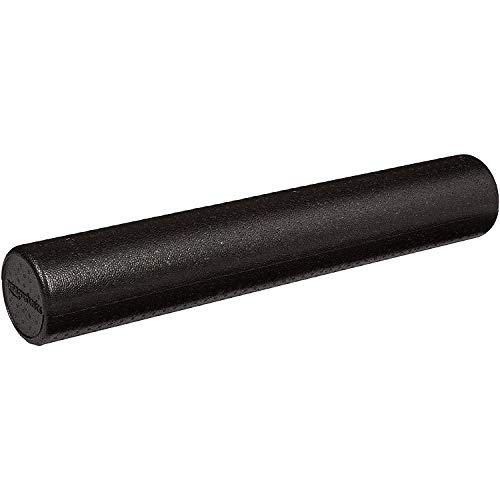 |
Best Budget Workhorse / Full-Length Value Amazon Basics High-Density Round Foam Roller (36-Inch) |
Molded Expanded Polypropylene (EPP) | Full 36-Inch Length, 6-Inch Diameter | Solid High-Density Core | $ | Check Price » |
 |
Best Physical Therapy & Clinical Benchmark OPTP PRO-Roller Standard Density (36-Inch) |
Closed-Cell Cross-Linked EVA Foam | 36-Inch Length, 6-Inch Diameter | Pro Clinic Resilience | $$$ | Check Price » |
 |
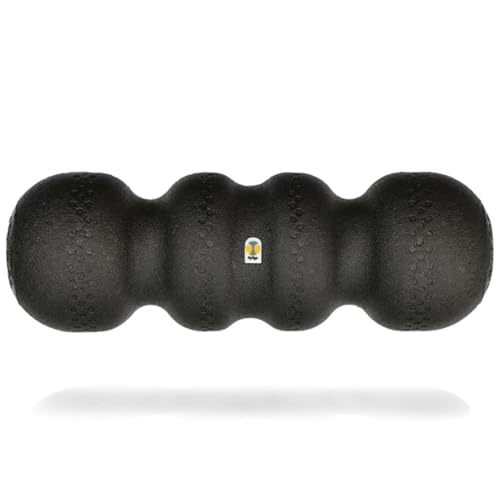
Best for Intense Knots & Deep Tissue Relief RumbleRoller Original Deep-Tissue Foam Roller |
High-Profile Flexible Nodules | Tear-Resistant Polyolefin Polymer Blend | Heavy-Duty Core | $$$ | Check Price » |
 |
Best for Back & Spine Protection Rollga PRO Contoured Ergonomic Foam Roller |
Patented Spine-Channel Contours | High-Density Ergonomic EPP Foam | 18-Inch Length | $$ | Check Price » |
 |
Best Vibrating Smart Roller / Tech Recovery Therabody Wave Roller High-Density Vibrating Foam Roller |
5 Vibration Frequencies | Bluetooth App Integration | Wave-Textured EVA Foam Shell | 3-Hour Battery | $$$$ | Check Price » |
🏋️ Strength & Recovery Notes: The IT Band Trap & Proper Rolling Pace
The biggest mistake athletes make on a foam roller is grinding hard over their iliotibial (IT) band on the outer thigh. The IT band is not a muscle; it’s a thick, tough sheet of connective tissue anchored to your leg bone. Rolling hard on it won’t loosen it up—it just pinches the sensitive nerves and bursa underneath, making your hip hurt worse. Instead, roll the muscles that pull on the band: roll your tensor fasciae latae (TFL) at the front of your hip pocket, and roll your upper glutes. Also, slow your pace down! Rolling fast triggers your muscles to tense up defensively. Roll slowly at about one inch per second, pausing over tender trigger points for 20 to 30 seconds while taking slow breaths to let your body relax.
Detailed Product Evaluations & Rankings
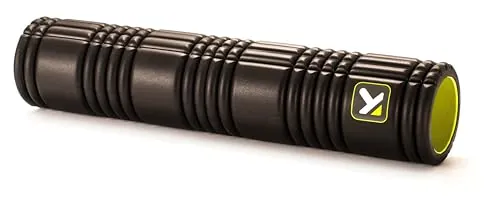
TriggerPoint GRID 2.0 Foam Roller
Price Tier: $$$ | Key Spec: Multi-Density EVA Foam Surface | Rigid Hollow-Core Pipe | Extra-Long 26-Inch Length, 5.5-Inch Diameter
The TriggerPoint GRID 2.0 is the most trusted recovery benchmark across college athletic rooms, training centers, and home gyms. Built with a rigid hollow core wrapped in multi-density EVA foam, it features three distinct grip zones: high firm tubular ridges, medium-width flat panels, and broad low patches. Because the outer foam molds over a tough inner tube, it delivers firm pressure without bowing under heavy lifters. The extra 26-inch length gives you twice the rolling room of compact rollers, making full-back and quad sweeps effortless.
Lifters and runners praise the GRID 2.0 for keeping its shape and firmness through years of daily punishment. Athletes love that the wider frame spans their entire back without sliding off the edges, though beginners note the firm core feels quite intense during initial calf and quad sessions.
✓ What Works Well
- Multi-density surface zones channel blood flow and simulate therapist hands
- Rigid hollow-core pipe never bends, softens, or loses its round shape
- Extra-wide 26-inch span easily accommodates broad backs and double-leg passes
- Closed-cell EVA foam wipes clean and repels gym sweat
⚠ What to Keep in Mind
- High firmness can feel harsh for total beginners with tender muscles
- Larger 26-inch profile takes up more room in small gym bags
Bottom Line: The top multi-density recovery roller for committed athletes who want proven durability, targeted trigger-point release, and ample rolling width.
Amazon Basics High-Density Round Foam Roller (36-Inch)
Price Tier: $ | Key Spec: Molded Expanded Polypropylene (EPP) | Full 36-Inch Length, 6-Inch Diameter | Solid High-Density Core
If you want a straightforward recovery cylinder that doesn’t break the bank, the Amazon Basics High-Density roller is a dependable garage gym staple. Molded from dense expanded polypropylene (EPP) foam with a smooth surface, it spreads your body weight evenly across large muscle groups. The full 36-inch length is a huge benefit: you can lie down along the entire roller with head and tailbone supported for spine-opening chest stretches after long days at a desk.
Home lifters and runners love the high value and solid build of the EPP foam, noting it holds up under 250-pound athletes without flattening. Long-term owners mention that the speckled foam can pick up carpet fuzz and feels quite hard against bony areas like shins and ribs.
✓ What Works Well
- Very accessible price point ($) for budget-friendly home gyms
- Full 36-inch length supports full-spine posture stretches and broad muscles
- High-density molded EPP foam delivers dependable firmness that won’t sag
- Lightweight solid-core build is easy to carry around the house
⚠ What to Keep in Mind
- Smooth exterior lacks specialized grooves for pinpoint knot work
- 36-inch length is too long for standard travel bags
Bottom Line: The best budget-friendly full-length roller for athletes who want a firm, solid cylinder for spinal mobility and broad leg flushes.
OPTP PRO-Roller Standard Density (36-Inch)
Price Tier: $$$ | Key Spec: Closed-Cell Cross-Linked EVA Foam | 36-Inch Length, 6-Inch Diameter | Pro Clinic Resilience
Walk into any physical therapy office or Pilates studio, and you’ll find the OPTP PRO-Roller. Unlike basic molded foam that hardens or flakes, the PRO-Roller uses closed-cell cross-linked EVA foam. This material gives you a supportive feel with just enough gentle give to cushion joints and vertebrae without bottoming out. It feels soft on skin yet holds its firm cylindrical shape through years of heavy clinical traffic.
Therapists, Pilates teachers, and rehab patients rave about the smooth surface and gentle comfort, reporting that clinic rollers survive years of daily use without softening. Users point out that while it costs more, its forgiving touch makes daily mobility work far more pleasant than stiff budget plastic.
✓ What Works Well
- Pro closed-cell EVA foam delivers balanced support with joint-friendly give
- Cross-linked foam build resists heavy daily use without breaking down
- Subtle textured finish prevents slipping during balance and core drills
- Non-porous surface wipes completely clean with standard alcohol sprays
⚠ What to Keep in Mind
- Higher upfront price tier ($$$) than standard EPP foam rollers
- Less aggressive for athletes who crave sharp, pinpoint knot pressure
Bottom Line: The clinical benchmark for physical therapy patients and mobility fans who want durable closed-cell foam with spine-friendly comfort.
RumbleRoller Original Deep-Tissue Foam Roller
Price Tier: $$$ | Key Spec: High-Profile Flexible Nodules | Tear-Resistant Polyolefin Polymer Blend | Heavy-Duty Core
When standard flat rollers barely scratch the surface of stubborn glute knots and stiff back muscles, the RumbleRoller steps up. It features rows of high-profile, thumb-like bumps that flex as you roll across them, digging deep into thick muscle tissue. The gaps between the bumps allow the roller to clear your spine and shoulder blades, targeting the deep muscles running right beside the bone.
Powerlifters and CrossFitters swear by the RumbleRoller’s aggressive knot-busting power, noting that nothing else breaks up hip and glute tension quite like it. Reviewers warn that it takes time to get used to: beginners often find the knobby bumps quite sharp until their muscles adapt over several sessions.
✓ What Works Well
- High-profile bumps reach deep muscle layers to break up stubborn knots
- Flexible nodules yield around bones while pressing firmly into tissue
- Tear-resistant polymer blend won’t split, crumble, or lose its shape
- Built-in antimicrobial shield prevents odor and germ buildup
⚠ What to Keep in Mind
- Intense pressure can feel too sharp for novice users or tender tissue
- Not designed for continuous rolling over bony joints
Bottom Line: The ultimate deep-tissue tool for experienced lifters and athletes who need intense trigger-point pressure to release stubborn tightness.
Rollga PRO Contoured Ergonomic Foam Roller
Price Tier: $$ | Key Spec: Patented Spine-Channel Contours | High-Density Ergonomic EPP Foam | 18-Inch Length
Standard straight foam rollers can feel painful on your back because they press right against your hard spinal bones. The Rollga PRO fixes this problem with curved body grooves and a deep center channel. As you roll down your spine, your vertebrae rest safely inside the center groove, while the outer curved zones massage your back muscles without pinching bone. Those same grooves cradle your calves, shins, and hamstrings for targeted multi-angle pressure.
Athletes with back stiffness and desk posture tension call the Rollga a massive relief for spinal mobility, reporting they can roll their thoracic back without bone pain. Reviewers love the rounded cradles for calf recovery, though some note it takes a couple of tries to find the right groove fit for each muscle.
✓ What Works Well
- Spine groove protects vertebrae to eliminate uncomfortable bone pressure
- Curved ridges deliver multi-angle cross-tissue massage across muscle fibers
- Shapes naturally around calves, shins, and arms for secure support
- High-density EPP foam supports up to 2,000 pounds without bowing
⚠ What to Keep in Mind
- Contoured shape needs careful body alignment compared to basic flat rollers
- 18-inch length sits between compact travel rollers and full studio rolls
Bottom Line: The smartest ergonomic roller available for athletes who want pain-free spine mobility and snug muscular contouring.
Therabody Wave Roller High-Density Vibrating Foam Roller
Brand: Therabody (TheraGun) | Brand: Therabody (TheraGun) | Brand: Therabody (TheraGun) | Price Tier: $$$$ | Key Spec: 5 Vibration Frequencies | Bluetooth App Integration | Wave-Textured EVA Foam Shell | 3-Hour Battery
When classic foam rolling meets powered vibration, you get the Therabody Wave Roller. Packed with five distinct motor speeds, it uses rapid pulses to quiet pain sensors, ease muscle guarding, and boost local blood flow faster than regular rolling alone. The wave-grooved EVA foam shell muffles motor sound while sending strong pulses deep into large muscles like your quads, glutes, and lats.
Endurance runners and tech-focused lifters love how the pulsing action numbs sharp soreness, making deep rolling sessions much easier to tolerate. Users praise the 3-hour battery life and guided app routines, but note the 3.3-pound weight and premium price tag ($$$$) make it a dedicated home luxury.
✓ What Works Well
- 5 pulse speeds mute muscle pain and boost local blood flow quickly
- Bluetooth connects to the Therabody app for guided sport-specific routines
- Wave grooves add traction and varied angles of tissue pressure
- Generous 12-inch width and 3-hour rechargeable battery life
⚠ What to Keep in Mind
- Top price tier ($$$$) represents a major gear investment
- Internal motor adds weight (3.3 lbs), making it heavy for travel bags
Bottom Line: The peak of high-tech muscle recovery, combining deep vibration with guided app routines to soothe stubborn muscular soreness.
🏋️ Strength & Recovery Notes: Closed-Cell Foam Care & Gym Cleanliness
If you’ve ever smelled a gym roller that soaked up years of workout sweat, you know why foam type matters. Cheap white foam rollers use open-cell foam. Their tiny open pores act like sponges, drinking in sweat, body oil, and skin bacteria. Once dirty, you can’t truly clean open-cell foam without tearing it. Always pick closed-cell EVA or molded EPP rollers. Closed-cell foam forms a smooth waterproof shield that locks moisture out. After tough training, wipe your roller with a clean gym disinfectant wipe and let it dry. Don’t leave foam rollers in hot car trunks, because summer heat softens the foam core and warps the round tube into an egg shape.
Also Considered: Other Popular Foam Rollers We Evaluated
During our mobility equipment research, our coaching staff evaluated dozens of rollers across high-density solid foam, hollow cores, and textured surfaces. While our six top award picks offer the finest combination of muscle release, spine safety, and durability, several popular models were closely evaluated before being edged out:
Price Tier: $$
Why it missed the cut: The classic 13-inch compact hollow cylinder travels easily in a gym duffel, but broad-shouldered lifters and runners find it too short to roll both calves at once or sweep the full thoracic spine without rolling off the edge.
Price Tier: $
Why it missed the cut: Features durable molded polypropylene foam that resists flattening, but the ultra-smooth, non-textured surface tends to slide and skid across polished hardwood and smooth gym tiles during hip-flexor rolls.
Price Tier: $$$
Why it missed the cut: Features a dedicated spinal canal groove that delivers exceptional, targeted pressure along tight erector muscles, but the narrow circular wheel geometry cannot roll out quadriceps, calves, or lats.
Price Tier: $$
Why it missed the cut: Its hourglass contour wraps nicely around calf muscles and hamstrings, but the raised outer ridges create excessive localized pressure when attempting broad back rolls.
Foam Roller Selection Guide: The 5-Pillar Buyer’s Playbook
Self-myofascial release has become a key part of everyday athletic training. According to a peer-reviewed sports science study on foam rolling, regular rolling enhances joint range of motion and helps clear muscle soreness without hurting performance. But walking down the fitness aisle reveals all kinds of rollers, from soft foam noodles to knobby hard-plastic tools. Picking the best roller comes down to five basic buyer rules:
1. Foam Density & Core Materials (EPP vs. EVA vs. Open-Cell PE)
The foam density and core build determine how long your roller lasts and how firm it feels under your body. Whether you’re flushing your quads after running hills or decompressing your shoulders after heavy pressing on a weight bench, your roller must hold up under full body weight. Polyethylene (PE) is the cheapest option, found in light white foam rollers. While affordable, PE foam softens quickly, developing permanent flat divots within two or three months. Expanded Polypropylene (EPP) is the top choice for firm budget rollers: heat-fused under pressure, solid EPP beads hold their rigid shape under 300-pound lifters without bending. For top-tier rollers, closed-cell EVA foam is the winner. EVA gives you great durability, a non-slip rubbery grip, and a waterproof skin that blocks sweat completely.
2. Surface Texture Styles (Smooth Cylinders vs. Multi-Density Grids vs. Deep Knobs)
The texture on your roller changes how pressure hits your muscles. Smooth rollers (like Amazon Basics or OPTP) spread force evenly across your skin. That makes them great for broad leg passes (quads, hamstrings, and calves) and for athletes who bruise easily. Multi-density grid patterns (like the TriggerPoint GRID) use ridges and flat panels that copy a therapist’s fingers and palms, helping move fluid through muscle tissue. Finally, high-profile knobs (like the RumbleRoller) are built for deep trigger-point work. These tall bumps reach deep into tight knots, but need careful control near bony joints.
3. Length & Diameter Sizing (13-Inch Travel vs. 36-Inch Full-Spine Support)
Foam rollers come in three common lengths: short travel sizes (12 to 14 inches), mid-size models (18 to 26 inches), and full-length rolls (36 inches). A 13-inch roller is light, easy to pack, and fits in gym duffels for track warmups, but only handles one leg at a time. A full-length 36-inch roller gives you full-body versatility at home: you can lie along its length—supporting your head and hips at once—for chest-opening posture stretches. Standard diameter is 5 to 6 inches, which gives good ground clearance without arching your lower back too high.
4. Price-Tier Reality Check ($, $$, $$$, $$$$)
In the roller market, price matches material quality, shape design, and powered motor tech:
- Budget ($): High-density molded EPP solid rollers. Super tough firmness, smooth skin, simple build. Great value for garage gyms.
- Mid-Tier ($$): Hollow-core multi-density rollers and curved back-safe rollers (Rollga PRO). Durable closed-cell EVA foam, targeted ridges, easy handling.
- Premium ($$$): Clinical cross-linked EVA rollers and wide hollow tubes (OPTP PRO-Roller, TriggerPoint GRID 2.0, RumbleRoller). Pro durability, specialized textures, and multi-year clinic life.
- Luxury High-Tech ($$$$): Motorized vibrating rollers (Therabody Wave Roller). Multi-speed pulse motors, rechargeable batteries, and companion phone app routines.
5. Foam Care, Cleaning & Longevity Rules
Pairing your foam rolling sessions with light mobility drills and warm-up sets using adjustable dumbbells creates a complete routine that primes your nervous system without fatiguing your joints. To keep your foam roller fresh and help it last for years, follow these simple care steps:
- Wipe Down Weekly: Clean closed-cell foam with gym wipes or a damp cloth with mild soap. Don’t dunk hollow-core rollers in water, as trapped moisture inside the tube can breed mildew.
- Keep Out of Extreme Heat: Don’t leave rollers in hot car trunks or on sunny porches. High heat weakens foam bonds and warps round cylinders out of shape.
- Avoid Sharp Metal: Keep rollers away from rough barbell knurling, sharp weight plates, or driveway gravel that can tear the foam skin.
Frequently Asked Questions
Should I roll before or after my workouts?
Both work well, but you should change your speed and goals! Before workouts, roll fast and light: take 30 to 60 seconds per muscle using brisk passes to warm up tissue, wake up blood flow, and loosen joints without tiring your body. After workouts, roll slow and relaxed: spend 60 to 90 seconds per muscle, moving about one inch per second and holding tender spots to ease muscle tightness and help recovery.
Is foam rolling supposed to hurt?
There is a big difference between a good release and sharp, harmful pain. On a pain scale of 1 to 10, rolling should stay between 5 and 7. If you find yourself gasping, holding your breath, or tensing other muscles, the roller is too hard or you are putting too much weight on it. Sharp pain makes muscles tighten up, which ruins the exercise. Ease the pressure by putting more weight on your hands and feet.
Can I roll my lower back with a regular foam roller?
Rolling your lower back directly on a hard, straight roller is not a good idea. Your lower back curves inward naturally and lacks the bone support of your rib cage. Pressing a stiff roller under your lower back can jam small spinal joints and make back muscles spasm. Instead, use a curved roller with a spine channel (like the Rollga), or roll the hip muscles that pull on your back: your glutes, hip flexors, and hamstrings.
Do vibrating foam rollers work better than regular rollers?
Yes, sports science tests show that adding vibration gives clear perks. Rapid vibration stimulates sensory skin nerves, which helps block pain signals from reaching your brain. This lets you work on tight, tender muscles with less discomfort while boosting local blood flow faster than regular rolling by itself.