Firm Ground (FG) vs. Artificial Grass (AG) vs. Turf (TF): Cleat Safety & Stud Guide 2026
Walk past any modern synthetic soccer complex on a Saturday morning, and you’ll see dozens of players lacing up aggressive chevron-bladed firm ground cleats designed for lush natural grass. Ten minutes into the first half, a winger attempts a sharp cut, their front bladed studs bite into the compressed rubber crumb and refuse to rotate, and you hear that dreaded pop in their knee. It’s one of the most preventable injuries in youth and adult soccer.
With artificial turf fields replacing natural grass across school districts and municipal parks, players and parents are constantly asking: Can I wear my regular soccer cleats on artificial turf? What’s the difference between AG and TF outsoles? Why are bladed studs banned in certain leagues? Whether you’re shopping for your first pair of boots or deciding what to pack in your kit bag, this guide breaks down the biomechanics, surface dynamics, and outsole engineering you need to stay healthy and fast on the pitch.
Can You Wear FG Cleats on Artificial Turf?
No, you should never wear bladed or chevron Firm Ground (FG) cleats on modern 3G or 4G artificial turf. Aggressive FG studs trap in compressed rubber crumb infill, creating dangerous rotational resistance that transfers 100% of cutting torque directly to your knee ligaments (ACL and MCL). For artificial turf, you need either conical Artificial Grass (AG) cleats or multi-lug Turf (TF) shoes with rubberized outsoles.
- Firm Ground (FG) blades are engineered to slice and release in natural dirt, not synthetic turf.
- Artificial Grass (AG) outsoles use hollow, conical circular studs that allow smooth 360-degree pivoting.
- Turf (TF) shoes use dense low-profile rubber nubs to distribute weight and relieve pressure on hard turf carpet.
- Major brands (Nike, Adidas, Puma) explicitly void manufacturer warranties if FG cleats separate or crack on artificial turf.
2. Master Comparison: Field Surfaces vs. Stud Architecture
Before examining individual boot builds, you’ve got to match the outsole pattern to the exact pitch surface you’re playing on. Here’s how the four primary soccer footwear categories compare across traction, surface penetration, and joint safety:
| Outsole Type | Pitch Surface | Stud Geometry | Knee & Ankle Risk on Turf | Best-Use Scenario |
|---|---|---|---|---|
 Firm Ground (FG) Chevron / Bladed |
Dry to slightly damp natural grass | 10–14 molded chevron, triangular, or bladed studs (12–15mm) | HIGH (Extreme rotational catch hazard) | Natural outdoor grass fields with adequate soil moisture |
 Artificial Grass (AG) Hollow Conical |
3G & 4G synthetic turf with rubber crumb & sand infill | 14–24 short, hollow conical circular studs (8–10mm) | MINIMAL (Permits smooth 360° rotational pivot) | Modern infill turf pitches; mandatory for injury prevention |
 Turf (TF) Rubber Multi-Lug |
Short-pile carpet turf, indoor cages, dry hard ground | 30–50+ small, low-profile rubber lugs on full EVA midsole | VERY LOW (Zero stud pressure, cushioned impact) | Training sessions, older artificial carpet pitches, aging joints |
 Indoor Court (IN / IC) Flat Gum Rubber |
Polished hardwood, sports linoleum, concrete street courts | Flat, non-marking gum rubber with herringbone sipings | DANGEROUS ON WET (Slicks out on outdoor turf) | Official futsal gym courts, school gyms, indoor court leagues |
3. The Rotational Torque Hazard: How Chevron Studs Tear ACLs
To understand why soccer cleats act differently on synthetic grass than on natural sod, you have to understand soil displacement versus rubber infill compaction. When you sprint and plant your foot on a natural grass field, the earth yields under pressure. If you make a violent directional cut, the natural sod tears away—leaving a small divot in the grass while allowing your planted foot to rotate freely with your hip and torso.
Synthetic 3G and 4G turf fields don’t yield. Underneath the green polyethylene blades sits a deep bed of shredded recycled tire crumb and silica sand laid over a hard tarmac or asphalt substrate. When you drive an aggressive chevron or bladed stud into rubber crumb at full speed, the crumb packs tightly around the flat edges of the blade like wet cement. Instead of releasing smoothly, the cleat locks into the turf matrix like an anchor.
While your cleat is locked firmly in the rubber infill, your upper body, pelvis, and femur continue rotating into the cut. Because the shoe cannot rotate, that sudden rotational torque has only one place to go: your knee joint. The resulting mechanical stress places extreme lateral and twisting forces on your Anterior Cruciate Ligament (ACL), Medial Collateral Ligament (MCL), and meniscus. Sports medicine clinical studies have consistently found that amateur athletes wearing bladed FG boots on artificial turf suffer up to a 45% higher incidence of non-contact lower-extremity injuries compared to those wearing conical AG or TF soles.
⚽ Coach Liam’s Sideline Notebook: The 5-Second Turf Squeeze Test for Visiting Away Fields
Whenever our club squad travels to an unfamiliar away complex, the first thing I do during walk-throughs is kneel down and dig my thumbs deep into the turf fibers. If your thumbs easily sink two inches into plush, fluffy rubber crumb that springs back immediately, it’s a well-maintained 3G/4G pitch where dedicated AG conical cleats will perform cleanly. If your thumbs hit a rock-hard layer of compacted sand after just a half-inch of flattened synthetic blades, that field has lost its infill cushion. On neglected, rock-hard turf, I tell our players to put their molded cleats back in their bag and lace up cushioned Turf (TF) shoes with rubber nub outsoles. Playing on compacted turf in long studs will leave your heels bruised and your Achilles tendons screaming by halftime.
4. The 4 Outsole Categories Detailed (FG, AG, TF & Indoor Court)
Soccer shoe manufacturers have engineered four distinct outsole configurations to handle the diverse friction requirements of modern playing surfaces. Understanding their structural differences will help you choose the right tool for match day:
Firm Ground (FG) Cleats: The Natural Grass Benchmark
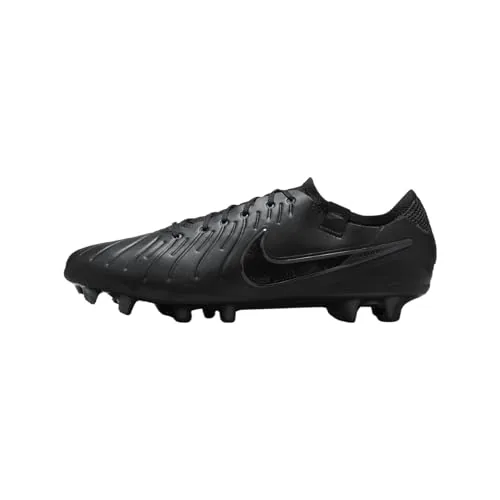
Firm Ground outsoles feature 10 to 14 strategically placed molded polyurethane or TPU studs. Modern FG designs frequently employ aggressive chevron, triangular, or curved bladed shapes (such as Nike’s Mercurial or Puma’s Ultra line) engineered to bite into firm, natural soil for explosive forward acceleration. Because natural dirt allows studs to sink in fully, foot pressure is evenly distributed across the entire baseplate.
When worn on synthetic turf, however, these long 13–15mm blades cannot penetrate the hard sub-base. The player ends up standing on the tips of the studs, creating pinpoint ‘stud pressure’ under the metatarsal heads that leads to severe foot cramping, blistering, and plantar fascia inflammation.
Firm Ground (FG) Outsole Architecture (e.g. Adidas Predator / Nike Mercurial)
Stud Architecture: Notice the aggressive, knife-like chevron and triangular studs along the forefoot perimeter. Their sharp angular edges are engineered to slice linearly into soft sod for acceleration, but have wide flat profiles that cannot rotate once embedded in synthetic rubber crumb.
Surface Dynamics: High performance on natural grass with adequate moisture. Strictly prohibited on artificial turf due to rotational stud lock and severe ACL/MCL tear hazard.
Artificial Grass (AG) Cleats: 360-Degree Conical Protection
Artificial Grass outsoles are purpose-built for rubber-crumb synthetic pitches. Instead of long directional blades, AG plates feature 14 to 24 shorter (8–10mm), completely circular conical studs. Many AG models feature hollow-core studs that reduce overall boot weight while creating air channels that prevent rubber crumb from packing inside.
Because conical studs are symmetrical, they don’t have sharp edges to catch against turf fibers. When you plant and pivot, the circular studs slip and slide smoothly through the infill, allowing natural rotational release without catching your ankle or knee in an unyielding torque trap. AG plates also feature a secondary layer of abrasive-resistant TPU reinforcement around the toe bumper to withstand artificial turf friction.
Artificial Grass (AG) Outsole Architecture (e.g. Puma Future AG / Nike Phantom AG)
Stud Architecture: Notice the 14 to 20 completely round, hollow-core conical studs distributed evenly across the baseplate. The symmetrical circular geometry has zero sharp edges, allowing your planted foot to spin smoothly 360 degrees through compacted turf infill.
Surface Dynamics: Certified for 3G and 4G synthetic turf pitches as well as firm natural sod. Provides responsive matchday bite without creating rotational torque traps.
Turf (TF) Soccer Shoes: Cushioned Rubber Lug Workhorses
Turf soccer shoes look and feel very different from traditional cleats. Instead of individual plastic studs, TF outsoles feature 30 to 60+ small, low-profile rubberized lugs molded across the entire sole. More importantly, turf shoes incorporate a full-length or three-quarter EVA or responsive foam midsole (such as Nike React, Adidas Lightstrike, or Puma ProFoam) sandwiched between the upper and the outsole.
This foam midsole is vital because artificial turf has almost zero natural shock absorption. On hard, aging turf carpet or frozen winter grounds, turf shoes absorb the pounding impact that would otherwise travel into your knees, hips, and lower back. They’re the most durable, joint-friendly footwear choice for adult recreational leagues and coaches running daily training sessions.
Turf (TF) Outsole Architecture (e.g. Adidas Mundial Team / Nike Premier TF)
Stud Architecture: Notice the complete absence of rigid plastic studs. Instead, the sole features a dense matrix of 40+ low-profile, flexible rubber nubs paired with a full-length shock-absorbing foam midsole to distribute weight evenly.
Surface Dynamics: The premier choice for short-pile carpet turf, hard municipal cages, and adult rec leagues. Eliminates stud pressure and protects heels on unyielding surfaces.
Indoor Court (IN / IC) Shoes: Non-Marking Flat Court Grip
Indoor court and futsal shoes feature completely flat outsoles made from soft, non-marking gum rubber. The tread pattern relies on microscopic herringbone grooves, pivot circles, and flex sipings engineered to squeegee dust and create friction on high-gloss hardwood basketball gym floors, sports court linoleum, or smooth asphalt cages.
Never wear indoor court shoes on an outdoor artificial turf field—especially if morning dew or rain is present. Without raised lugs to part the synthetic grass blades, flat gum rubber hydroplanes on moist plastic turf fibers, turning simple stopping motions into dangerous groin pulls and tailbone spills.
Indoor Court (IN / IC) Outsole Architecture (e.g. Adidas Samba / Joma Top Flex)
Stud Architecture: Notice the completely flat non-marking amber gum rubber profile featuring fine herringbone zig-zag grooves and a forefoot pivot ring. Engineered purely for floor friction with zero raised lugs to catch on court varnish.
Surface Dynamics: Essential for hardwood gymnasium floors, futsal sports courts, and street tile. Dangerous on outdoor turf or wet grass due to zero lug penetration.
5. The Manufacturer Warranty Trap: How Turf Destroys FG Boots
Beyond the severe joint injury hazard, there’s a financial reason you shouldn’t wear firm ground boots on artificial turf: you will instantly void your manufacturer warranty. Major athletic brands including Nike, Adidas, and Puma explicitly stipulate in their footwear warranty policies that wearing standard FG cleats on artificial grass constitutes improper use.
Artificial turf generates significantly more frictional heat than natural soil. In hot summer weather, synthetic turf surface temperatures frequently exceed 120°F to 140°F. When you combine that extreme heat with the abrasive grinding action of silica sand infill, two structural failures occur:
- Soleplate Delamination (Sole Separation): The industrial contact adhesives bonding the TPU soleplate to the upper soften under high turf heat. Within 4 to 8 weeks, the sole plate begins peeling open at the toe box like an alligator mouth.
- Stud Shearing & Cracked Plates: Because natural grass yields under lateral loads, cleat baseplates are engineered to flex gently. On unyielding turf, the lateral torque snaps rigid TPU studs clean off the plate or fractures the chassis directly under the ball of the foot.
When you attempt to return a cracked or separated FG cleat for a warranty claim, manufacturer inspection teams check the stud tips and toe box. Synthetic turf leaves distinct black rubber scuff marks and melted polymer abrasions on the TPU that are impossible to hide. If they see turf burn on an FG plate, your claim will be rejected immediately.
6. Coach Liam’s Essential Matchday Footwear & Surface Kit
Every experienced field athlete knows that field conditions change from Saturday to Sunday. In my coaching gear bag, I always keep six essential footwear accessories that protect players’ joints and solve matchday surface surprises:
Matchday Surface & Footwear Kit
- ✓ Dedicated AG or TF Backup Boots (never get caught stranded when an away match is moved to rock-hard synthetic turf)
- ✓ Silicone Pad Soccer Grip Socks (locks your foot to the insole, stopping in-shoe sliding during violent turf cuts)
- ✓ Cohesive Athletic Self-Adherent Wrap (secures loose sock sleeves and provides light ankle compression without sticky tape residue)
- ✓ Nylon Cleat Stud Cleaning Brush (removes packed clay and damp crumb infill between halves to restore sole traction)
- ✓ Spare Set of Flat Athletic Replacement Laces
- ✓ Hydrocolloid Blister Bandages (Compeed or KT Tape Blister)
7. Choosing the Right Boot: Our 2026 Tested Rankings
Now that you know how outsole geometry dictates joint safety, field traction, and boot durability, you’re ready to choose the best footwear for your upcoming season. Our coaching team has wear-tested and reviewed the premier football boots across all major playing surfaces:
Best Soccer Cleats 2026: Firm Ground, Control & Speed Ranked
Explore our comprehensive 2026 field test of the premier natural grass boots—evaluating touch, heel lockdown, stud pressure relief, and durability across flagship models from Nike, Adidas, Puma, and New Balance.
Best Turf Soccer Shoes 2026: Artificial Turf & Short Carpet Ranked
Need dedicated protection for rubber-crumb 3G/4G pitches and short carpet turf? Check out our top-ranked turf soccer shoes featuring cushioned EVA midsoles and multi-lug rubber traction for maximum knee comfort.
8. Frequently Asked Questions About Soccer Cleats & Surfaces
Can youth players wear FG cleats on artificial turf?
While younger U8 to U10 players weigh significantly less than adult athletes—generating less overall rotational torque—wearing long bladed FG cleats on turf is still a bad habit. Long studs create painful metatarsal hot spots on hard turf and encourage poor pivoting mechanics. If your child plays primarily on synthetic fields, choose either an Artificial Grass (AG) or Multi-Ground (MG) cleat with rounded conical studs to protect their developing growth plates.
What is the difference between 3G and 4G artificial turf?
Both 3G (Third Generation) and 4G (Fourth Generation) synthetic pitches feature long synthetic grass blades. The main difference is the infill composition: 3G pitches rely on a blend of silica sand and black recycled crumb rubber pellets to keep blades upright and provide bounce. 4G systems use advanced yarn polymers with minimal or non-rubber organic infill. Both surfaces require either conical AG studs or multi-lug TF soles for safe rotational release.
Can you wear turf (TF) shoes on natural grass?
You can safely wear turf shoes on dry, hard-packed natural dirt fields in the peak of summer, and they’ll provide surprisingly comfortable grip. However, if the natural grass is damp, soft, or muddy, turf shoes will quickly slide out. The small 4mm rubber nubs cannot penetrate deep enough into damp topsoil to provide cutting traction, leaving you slipping on wet grass like you’re wearing sneakers.
What are Multi-Ground (MG) soccer cleats?
Multi-Ground (MG or FG/AG) cleats are a hybrid compromise engineered by brands like Puma and Adidas. They feature a higher count of medium-length studs (typically 14 to 18) that blend circular conical shapes with soft-edged studs. While not quite as cushioned as a dedicated turf shoe, genuine MG plates distribute pressure evenly enough to be safely worn on both firm natural grass and modern artificial turf without voiding warranties or endangering knee ligaments.