Best Pickleball Shoes 2026: Court Traction, Lateral Stability & Durability Ranked
Pickleball demands lightning-fast lateral direction changes, aggressive kitchen split-steps, and explosive forward lunges. Stepping onto an outdoor court in standard running sneakers is one of the most common causes of rolled ankles and foot injuries. Running shoes lack the lateral outriggers and high-abrasion rubber outsoles required to handle abrasive painted courts. To help you stay stable and injury-free, we evaluated the premier pickleball and court shoes for 2026 across lateral containment, outsole grip, toe-drag durability, and arch comfort.
Comparison Table: Best Pickleball Shoes at a Glance
| Model | Product & Award | Key Spec / Category | Tier | Action |
|---|---|---|---|---|

|
Best Overall Lateral Stability Pick ASICS Gel-Renma 2 Court Shoes |
Forefoot GEL Cushioning & Trusstic System Support | $$ | Check Price » |

|
Best Lightweight Speed Pick Babolat Jet Mach All Court Shoes |
Matryx EVO Woven Upper & Michelin Premium Rubber Outsole | $$$ | Check Price » |
|
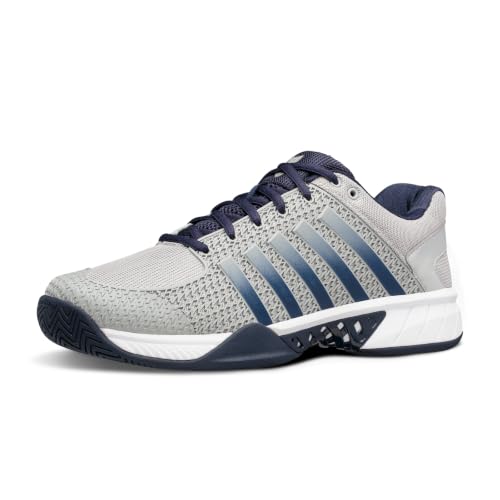
Best Pickleball-Specific Design K-Swiss Express Light Pickleball Shoes |
AöSTA 7.0 High-Density Rubber & Durawrap Toe Drag Guard | $$$ | Check Price » |

|
Best Wide-Foot Stability Pick Wilson Rush Pro Ace Court Shoes |
4D Support Chassis & Wider 2E Forefoot Toe Box | $$$ | Check Price » |

|
Best Heavy-Duty Durability Pick HEAD Revolt Pro 4.0 Pickleball Shoes |
T-KORE 360° Chassis & Hybrasion+ High-Wear Rubber Outsole | $$$ | Check Price » |

|
Best Maximum Support Benchmark ASICS Gel-Resolution 9 Court Shoes |
DYNAWALL Lateral Wall & AHAR+ High-Abrasion Outsole | $$$$ | Check Price » |
⚽ Coach Liam’s Footwear Notes: Running Shoes vs. Court Footwear: Lateral Ankle Security
Never step onto a pickleball court in standard running sneakers. Running shoes are engineered strictly for forward linear motion, featuring thick, narrow heels with zero lateral outriggers. When you plant hard to chase a sideline drive, the soft foam edge collapses, causing severe ankle sprains. Dedicated court shoes feature wide, flat outsoles with rigid lateral outriggers that keep your foot safely anchored.
Detailed Reviews of the Best Pickleball Shoes
ASICS Gel-Renma 2 Court Shoes
Price Tier: $$ | Key Spec: Forefoot GEL Cushioning & Trusstic System Support
The ASICS Gel-Renma 2 is built from the ground up for the sharp lateral cuts and forward lunges unique to pickleball. ASICS integrates their proven Trusstic support technology in the midfoot chassis to prevent excessive torsion when you stop abruptly at the kitchen line. Forefoot GEL cushioning absorbs impact when lunging for low dinks, while synthetic leather overlays provide structural lockdown that prevents your foot from rolling over the outsole.
✓ What Works Well
- Trusstic midfoot support prevents twisting during sudden lateral stops
- Wide forefoot outrigger flare prevents lateral rollover on hard cuts
- Durable gum rubber outsole grips outdoor asphalt and indoor court surfaces
⚠ What to Keep in Mind
- Requires a brief break-in session for the synthetic overlays to soften
- Slightly warmer upper than minimalist mesh tennis models
Bottom Line: The premier lateral support shoe for club players seeking injury-preventing ankle security and durable court traction.
Babolat Jet Mach All Court Shoes
Price Tier: $$$ | Key Spec: Matryx EVO Woven Upper & Michelin Premium Rubber Outsole
Weighing under 11 ounces, the Babolat Jet Mach is the ultimate featherweight court shoe for quick-footed players who cover the kitchen line with speed. The upper utilizes Matryx EVO fabric—a patented blend of Kevlar and polyamide threads that provides featherlight containment without stretching out. Co-developed with tire titan Michelin, the outsole rubber compound resists abrasive asphalt grind and provides incredible stopping friction.
✓ What Works Well
- Sub-11-ounce featherweight feel enables rapid first-step acceleration
- Michelin rubber outsole resists high-friction outdoor court wear
- Matryx EVO Kevlar weave upper provides breathable, non-stretch containment
⚠ What to Keep in Mind
- Runs slightly narrow through the toe box; wide feet should size up
- Low-profile midsole favors court speed over plush cloud cushioning
Bottom Line: The benchmark lightweight speed shoe for agile players who prioritize quick kitchen reactions and elite Michelin durability.
K-Swiss Express Light Pickleball Shoes
Price Tier: $$$ | Key Spec: AöSTA 7.0 High-Density Rubber & Durawrap Toe Drag Guard
K-Swiss was among the first athletic brands to engineer footwear specifically for the unique kinematics of pickleball. The Express Light features a customized Durawrap toe cap that shields against abrasive dragging when lunging into the kitchen. The AöSTA 7.0 high-density rubber outsole provides multi-directional herringbone traction that grabs painted asphalt courts firmly.
✓ What Works Well
- Pickleball-specific toe guard prevents drag wear during low kitchen dinks
- AöSTA 7.0 dense rubber compound resists severe outdoor court abrasion
- Generous toe box volume accommodates medium to slightly wider feet
⚠ What to Keep in Mind
- Midsole foam softens slightly after four months of heavy daily play
- Laces are slightly long and require double-knotting
Bottom Line: A purpose-built pickleball shoe offering reinforced toe-drag protection and exceptional comfort right out of the box.
Wilson Rush Pro Ace Court Shoes
Price Tier: $$$ | Key Spec: 4D Support Chassis & Wider 2E Forefoot Toe Box
If you struggle with tight, pinching court shoes, the Wilson Rush Pro Ace is engineered specifically with a wider 2E forefoot fit. Its asymmetrical 4D Support Chassis runs from heel to toe, limiting supination during sharp lateral changes of direction. Wilson’s Duralast high-density rubber outsole grips painted pickleball surfaces with outstanding abrasion resistance.
✓ What Works Well
- Generous wide-forefoot toe box relieves side pressure and bunion friction
- 4D Support Chassis stabilizes the foot against aggressive ankle rolling
- Duralast outsole compound delivers exceptional longevity on rough courts
⚠ What to Keep in Mind
- Slightly heavier overall mass than minimalist lightweight speed models
- Styling is traditional and understated compared to modern flashier designs
Bottom Line: The premier choice for players with wider feet who demand rock-solid lateral stability and all-day court comfort.
HEAD Revolt Pro 4.0 Pickleball Shoes
Price Tier: $$$ | Key Spec: T-KORE 360° Chassis & Hybrasion+ High-Wear Rubber Outsole
Engineered for aggressive baseline grinders who punish their footwear, the HEAD Revolt Pro 4.0 is built with heavy armor protection. HEAD’s T-KORE 360° chassis integrates torsional core stability with reinforced lateral outriggers, keeping your foot firmly locked over the footbed. The Hybrasion+ non-marking rubber outsole delivers remarkable durability on abrasive outdoor acrylic courts.
✓ What Works Well
- T-KORE 360° stability technologies physically block lateral ankle rolling
- Hybrasion+ rubber outsole compound withstands daily abrasive court friction
- Lockdown strap system keeps the midfoot centered without heel slippage
⚠ What to Keep in Mind
- Stouter chassis requires a short break-in period before feeling completely flexible
- Carries slightly more weight than ultralight speed shoes
Bottom Line: The definitive choice for heavy baseline players who demand rugged armor construction and maximum tread lifespan.
ASICS Gel-Resolution 9 Court Shoes
Price Tier: $$$$ | Key Spec: DYNAWALL Lateral Wall & AHAR+ High-Abrasion Outsole
For competitive tournament players who play four to five days a week on abrasive outdoor surfaces, the ASICS Gel-Resolution 9 is the gold standard for tank-like durability. The rigid DYNAWALL resin frame wraps up the lateral side of the midsole, physically anchoring your foot during violent stops. Its AHAR+ (ASICS High Abrasion Rubber) outsole provides industry-leading tread longevity.
✓ What Works Well
- DYNAWALL resin framework delivers maximum lateral ankle roll prevention
- AHAR+ rubber outsole offers the highest abrasion resistance in the industry
- Dual Gel cushioning in rearfoot and forefoot absorbs intense landing shock
⚠ What to Keep in Mind
- Stiff unibody chassis requires 2 to 3 practice sessions to break in fully
- Higher price tier tailored for serious, frequent tournament competitors
Bottom Line: The ultimate high-durability court shoe, offering maximum ankle security and industrial-grade outsole lifespan.
⚽ Coach Liam’s Maintenance Notes: Preserving Outsole Grip & Proper Air Drying
Outdoor pickleball courts are surfaced with silica sand and acrylic paint, which acts like coarse sandpaper on outsole rubber. To preserve tread life, never wear your court shoes to and from the facility on street concrete. Change into your court footwear at the bench. After playing, wipe away grit with a damp cloth and allow your shoes to air-dry naturally at room temperature with the insoles removed.
Pickleball Shoe Selection Guide: 5-Pillar Buyer’s Playbook
Pickleball kinematics are defined by sudden lateral shuffles along the kitchen line, abrupt split-step decelerations, and explosive forward lunges to dig out dipping third-shot drops. Because outdoor pickleball courts are coated in heavy acrylic paint mixed with abrasive silica sand, standard running shoes wear down within a dozen matches and offer virtually zero lateral rollover resistance. Stepping onto an asphalt court in plush running footwear with high stack heights is the single most common cause of acute inversion ankle sprains among pickleball athletes. To protect your lower extremities and achieve lightning-fast court coverage, evaluate prospective footwear against these five engineering pillars:
1. Lateral Outrigger Flanges & Torsional Midfoot Chassis
When you sprint to the sideline and brake hard to counter an overhead smash, immense centrifugal force drives your body weight directly against the outer edge of the forefoot. Dedicated court shoes incorporate an extended lateral outrigger flange—a rigid, flared rubber shelf molded along the outer pinky-toe perimeter. This wide base physically blocks the shoe from tipping outward. Beyond lateral outriggers, look for a molded thermoplastic or carbon midfoot shank (such as ASICS Trusstic or Babolat Michelin Active Flexion) spanning the arch. This internal bridge prevents the shoe from twisting longitudinally, providing torsional stability that preserves arch energy through multi-hour tournaments.
2. High-Density Outsole Rubber Compounds & Multi-Directional Herringbone
Gritty outdoor courts act like industrial sandpaper on outsole rubber. Casual athletic shoes use soft blown rubber or exposed EVA foam that grinds smooth in weeks. Premier court shoes utilize proprietary high-density, non-marking rubber formulations engineered specifically to resist high-temperature friction—such as Babolat’s Michelin rubber, ASICS AHAR+, or K-Swiss AöSTA 7.0 dense rubber. Ensure the tread features a modified herringbone groove pattern: fine zig-zag ridges provide maximum traction when pushing off laterally, while circular pivot circles under the ball of the foot facilitate smooth rotational spinning during transitional resets without catching abruptly.
3. Medial Drag Guards & Upper Durability Engineering
Dinking requires lunging low into the kitchen zone, forcing your trailing foot onto its inner edge in a low drag posture. On rough asphalt courts, this friction chews through conventional lightweight mesh upper fabric in a matter of weeks. Inspect the inner medial toe box for vulcanized polyurethane shielding (such as K-Swiss Durawrap or ASICS PGUARD). A reinforced medial wrap absorbs intense drag abrasion, preserving structural stitch lines and keeping the forefoot containment system intact over months of competitive play.
4. Fit Architecture, Heel Lockdown & Wide-Foot Accommodations
A high-performance court shoe must lock the calcaneus (heel bone) firmly against the rear counter to eliminate vertical heel slip during aggressive directional cuts. However, you must maintain roughly 3/8 to 1/2 inch of clearance between your longest toe and the front bumper. If your toes collide with the front cap on abrupt stops, you risk painful subungual hematomas (black toe). If you have wide feet (2E or wider) or bunions, avoid ultra-tapered European racing silhouettes; instead, select models built on generous lasts with expandable forefoot mesh panels (such as the Wilson Rush Pro Ace).
5. Price-Tier Reality Check ($, $$, $$$, $$$$) & Longevity Care
Footwear pricing directly correlates with rubber compound density, structural chassis rigidity, and upper drag shielding:
- Budget Rec Tier ($): Basic multi-court gym sneakers suitable for occasional indoor community center play on polyurethane floors.
- Value Performance Tier ($$): Proven court platforms (such as the ASICS Gel-Renma 2) providing Trusstic midfoot support, forefoot GEL shock absorption, and durable gum rubber outsoles.
- Tournament Pro Tier ($$$): Purpose-built pickleball designs (K-Swiss Express Light, Babolat Jet Mach, Wilson Rush Pro Ace, HEAD Revolt Pro 4.0) featuring specialized abrasion-resistant toe wrap guards, Michelin rubber blends, and lightweight Kevlar weaves.
- Elite Tour Flagship Tier ($$$$): Maximum-stability heavy armor models (such as ASICS Gel-Resolution 9) engineered with external lateral resin walls, Dynawall stabilization chassis, and industry-leading outsole abrasion guarantees for daily competitors.
To maximize outsole longevity, never wear court shoes as casual street footwear on concrete sidewalks. Always switch into your court shoes upon arriving at the facility. After matches, remove sweaty insoles, wipe court dust from rubber outsoles with a damp towel, and air-dry footwear at room temperature away from direct sunlight.
Frequently Asked Questions About Pickleball Shoes
Can I wear tennis shoes to play pickleball?
Yes. Tennis shoes and pickleball shoes share the same biomechanical requirements: hardcourt rubber outsoles, rigid lateral outriggers, and low centers of gravity. Any quality hardcourt tennis shoe performs exceptionally well on a pickleball court.
Can I wear running shoes to play pickleball?
No, absolutely not. Running shoes have narrow, high-stack heels designed solely for straight-ahead jogging. They lack lateral outriggers, meaning sudden side cuts can easily roll your ankle off the narrow foam base.
How long do pickleball shoes typically last?
On abrasive outdoor acrylic courts, active players who play 3 to 4 times per week typically wear through outsole tread in approximately 4 to 6 months. When the tread under the ball of your foot wears smooth, it is time to replace your shoes to avoid slipping.
Do I need different shoes for indoor gym wood courts?
Yes. If you play on smooth wooden gymnasium floors, choose shoes with natural gum rubber outsoles (like volleyball or squash shoes) for maximum grip. Gritty hardcourt shoes can feel slippery on dusty gym wood.