Lateral ankle sprains account for nearly one out of every five injuries suffered on a soccer pitch. Anyone who’s ever stepped on an opponent’s foot during an aerial duel or had their ankle roll outward while cutting on slippery turf knows that agonizing pop. The anterior talofibular ligament (ATFL) stretches or tears, followed immediately by severe swelling, throbbing pain, and weeks on crutches. When you’re finally cleared to play, returning to the pitch without adequate joint stabilization feels like playing Russian roulette with your ankle.
Yet finding an ankle brace that actually works for soccer is notoriously difficult. Modern soccer cleats are skin-tight, low-volume boots engineered with virtually zero internal dead space. If you try to shove a clunky, rigid plastic basketball brace inside a narrow speed cleat, you’ll crush your dorsal nerves, trigger agonizing blisters, and completely lose your touch on the ball. Soccer players require specialized support: braces that mechanically lock down dangerous lateral rollover (inversion) while leaving your toes completely free to point and flex for clean instep strikes and explosive sprinting. Proper boot fit matters just as much as brace selection, so review our soccer cleat rankings and FG vs. AG vs. turf cleat guide.
Below is our comprehensive coaching evaluation of the 5 best soccer ankle braces for 2026. We’ve evaluated each brace across cleat volume compatibility, lateral ligament stabilization, instep ball touch, and moisture breathability to keep you planted and protected all season long.
⚕️ Medical & Injury DisclaimerSportsGearLab provides athletic equipment reviews and coaching insights for educational and informational purposes only. This guide is not a substitute for professional medical advice, clinical diagnosis, or individualized treatment plans. Always consult an orthopedic physician, physical therapist, or certified athletic trainer regarding acute injuries, severe sprains, or persistent pain before returning to athletic competition.
Master Comparison Table: Soccer Ankle Braces at a Glance
| Model | Product & Award | Key Spec / Category | Tier | Action |
|---|---|---|---|---|

|
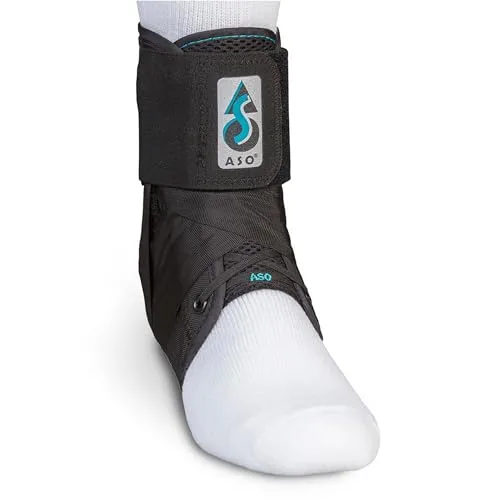
Best Overall / Athletic Trainer Standard Med Spec ASO Ankle Stabilizer Lace Up Brace with Straps |
Ballistic Nylon Boot | Non-Stretch Figure-8 Straps | CoolFlex Tongue | Bilateral Fit | $$ | Check Price » |

|
Best Halftime-Adjustable Figure-8 Support McDavid 195 Ultralight Ankle Brace with Figure-8 Straps |
Single-Layer Polyester Fabric | Figure-6/Figure-8 Straps | Level 3 Maximum Support | Bilateral Fit | $$ | Check Price » |

|
Best Maximum Rigid Ligament Defense Zamst A2-DX Strong Sports Ankle Brace |
Dual Molded Exo-Grid Guards | X-Strap Cross Stabilizers | Anatomical Left/Right Fit | $$$$ | Check Price » |

|
Best Malleolus Gel Comfort Shock Doctor Ultra Wrap Lace Ankle Support |
Internal Anatomical Gel Pads | Speed-Lace Loops | Multi-Directional Figure-8 Straps | Level 3 Support | $$ | Check Price » |

|
Best Minimalist Speed Cleat Compression Shock Doctor Ultra Knit Ankle Compression Sleeve with Stays |
4-Way Stretch Compression Knit | Dual Flexible Lateral Stays | Anatomical Gel Inlays | $ | Check Price » |
⚽ Field & Sideline Notes: How to Fit an Ankle Brace Inside Snug Soccer Cleats
Never try to jam a fully strapped ankle brace into a soccer cleat that’s already laced up. Soccer boots are designed with ultra-low internal volume, and forcing a brace in will pinch your instep nerves and crush your heel. Before putting on your cleat, unlace the bottom three or four eyelets completely to open up the throat. Wear a thin, moisture-wicking synthetic liner sock directly against your skin, lace the brace snugly over it, and slide your foot into the opened boot. If you experience pressure on the top of your foot where the figure-8 straps cross the navicular bone, use ‘window lacing’ (skip-lacing) across that specific eyelet of your cleat. This eliminates dorsal nerve pressure without compromising ankle lockdown.
Detailed Product Evaluations & Rankings
Each soccer ankle brace below has been evaluated across cleat volume compatibility, lateral ligament stabilization, instep ball touch, and moisture breathability. We’ve included proven trainer-grade lace-up corsets, halftime-adjustable straps, rigid composite exoskeletons, and ultra-slim compression sleeves to support every stage of joint recovery.
Med Spec ASO Ankle Stabilizer Lace Up Brace with Straps
Price Tier: $$ | Key Spec: Ballistic Nylon Boot | Non-Stretch Figure-8 Straps | CoolFlex Tongue | Bilateral Fit
Walk into any collegiate athletic training room or professional soccer clubhouse, and you’ll find shelves stocked with the Med Spec ASO. It’s the undisputed benchmark of athletic ankle bracing. Built from ultra-durable ballistic nylon, the ASO uses a patented figure-8 strapping system that perfectly replicates a certified athletic trainer’s custom stirrup and heel-lock tape job. Because the thin nylon base slips cleanly beneath your arch without adding vertical stack height, your heel stays planted securely inside the cleat’s heel cup, preventing heel slippage and friction blisters.
Collegiate players and club athletes consistently praise the ASO for slipping into snug soccer boots more easily than any other lace-up model on the market. Reviewers emphasize wearing a thin synthetic crew sock beneath the brace and pulling a cut-off team sock sleeve over the top to prevent double-sock bunching. Long-term owners note that the figure-8 straps hold tension through full ninety-minute matches in wet mud or abrasive turf without stretching out.
✓ What Works Well
- Patented figure-8 nylon straps deliver professional trainer-grade heel-lock security
- Ultra-thin ballistic nylon arch profile fits cleanly inside tight soccer boots without heel lift
- CoolFlex Achilles padding and tongue prevent painful friction over the extensor tendons
- Bilateral design fits comfortably on either the left or right foot
⚠ What to Keep in Mind
- Lacing up and strapping down takes two to three minutes before each session
- Velcro hooks can fray cleat tongues if the top elastic cuff isn’t pulled down completely
Bottom Line: The premier choice for competitive soccer players and athletic trainers who demand proven, non-stretch figure-8 ligament stability that fits comfortably inside standard cleats.
McDavid 195 Ultralight Ankle Brace with Figure-8 Straps
Price Tier: $$ | Key Spec: Single-Layer Polyester Fabric | Figure-6/Figure-8 Straps | Level 3 Maximum Support | Bilateral Fit
If you’ve ever had your ankle brace loosen up halfway through a grueling match and hated untying your muddy cleats to fix it, the McDavid 195 is engineered specifically for you. McDavid builds this brace with an external figure-6 strapping system that lets you re-tighten lateral strap tension directly from the top cuff without having to unlace your soccer boot. Constructed from a lightweight single-layer polyester fabric, it sheds unnecessary ounces while delivering McDavid Level 3 maximum joint defense against severe inversion rolls.
High school and club athletes love the convenience of quick sideline adjustments, noting they can crank down on the straps during halftime in under ten seconds. Players report that the padded interior collar feels slightly thicker around the ankle bones than unpadded braces during the initial break-in session, recommending that players with high insteps skip the middle cleat eyelet to avoid lace-bite pressure over the knot.
✓ What Works Well
- External strap design allows instant tension adjustments without unlacing soccer cleats
- Lightweight single-layer polyester shell minimizes sweat retention on hot matchdays
- Level 3 maximum protection effectively shields vulnerable ATFL and CFL ligaments
- Ventilated padded tongue dampens pressure across the dorsal bridge of the foot
⚠ What to Keep in Mind
- Interior collar padding adds slight bulk around the ankle joint during the first few wears
- Top elastic strap can feel snug on athletes with larger lower calves
Bottom Line: The ideal high-stability lace-up brace for athletes who want elite Level 3 joint protection with the convenience of instant, tape-free sideline strap adjustments.
Zamst A2-DX Strong Sports Ankle Brace
Price Tier: $$$$ | Key Spec: Dual Molded Exo-Grid Guards | X-Strap Cross Stabilizers | Anatomical Left/Right Fit
When you’re returning from a catastrophic Grade III ligament tear, chronic ankle instability, or a dreaded syndesmotic high-ankle sprain, soft fabric corsets often aren’t enough to give you peace of mind. The Zamst A2-DX represents the absolute pinnacle of rigid external joint defense. Utilizing dual anatomically contoured Exo-Grid composite guards on both the medial and lateral sides, it physically blocks your ankle from rolling inward or outward. Dual X-Straps pull upward and cross underneath the foot to lock the talus bone, stopping dangerous anterior shifting dead in its tracks.
Athletes recovering from severe joint trauma praise the fortress-like security, reporting that it feels virtually impossible to roll your ankle even when stepping into potholes or divots on rough turf. However, soccer players emphasize a crucial fitting reality: the rigid plastic Exo-Grid shells will not fit into skin-tight, narrow speed boots. Players successfully wear it by pairing it with supple leather cleats (like the Copa Mundial or New Balance 442) or going up half a size on the braced foot.
✓ What Works Well
- Dual rigid Exo-Grid composite guards physically prevent severe inward and outward rolls
- X-Strap stabilizers protect against high-ankle syndesmotic injuries and anterior talar shift
- Rear-entry application with zero lacing makes getting into the brace fast and pain-free
- Anatomically molded specifically for left and right ankle biomechanics
⚠ What to Keep in Mind
- Rigid composite wings will not fit inside ultra-narrow, one-piece knit speed cleats
- Sits at the highest price tier ($$$$) among athletic ankle supports
Bottom Line: The ultimate fortress-like external brace for center-backs and physical players recovering from severe tears or high-ankle sprains who wear forgiving leather boots.
Shock Doctor Ultra Wrap Lace Ankle Support
Price Tier: $$ | Key Spec: Internal Anatomical Gel Pads | Speed-Lace Loops | Multi-Directional Figure-8 Straps | Level 3 Support
For players recovering from a recent sprain whose ankle bones (malleoli) remain tender to the touch, conventional hard-stitched braces can cause unbearable rubbing. The Shock Doctor Ultra Wrap solves that painful friction problem by embedding multi-directional internal gel cushions directly around the ankle bones. These soft gel pads dampen direct ball impacts and cushion against the rigid collar of low-cut soccer boots. Shock Doctor pairs this comfort with convenient speed-lace loops and integrated figure-8 stability straps that deliver dependable Level 3 joint protection.
Youth and high school players love the soothing cushioning around tender, bruised ankle bones, noting that the finger pull-loops make cinching the laces much easier than traditional eyelets. Reviewers note that silicone gripper strips along the footbed stop the brace from shifting inside slick socks, though owners advise hand-washing and air-drying to keep the internal gel cushions in prime condition.
✓ What Works Well
- Internal anatomical gel pads protect tender, recovering ankle bones from cleat collar abrasion
- Speed-lace loop system allows rapid cinching without struggling through tight eyelets
- Multi-directional figure-8 straps deliver dependable Level 3 joint stabilization
- Silicone traction footbed prevents mid-match slipping inside synthetic soccer socks
⚠ What to Keep in Mind
- Gel inserts add slight width across the ankle joint compared to paper-thin ballistic nylon
- Requires careful hand-washing to preserve the internal gel alignment
Bottom Line: An outstanding, comfort-focused lace-up brace for recovering players who need firm Level 3 joint defense combined with soothing gel relief over tender ankle bones.
Shock Doctor Ultra Knit Ankle Compression Sleeve with Stays
Price Tier: $ | Key Spec: 4-Way Stretch Compression Knit | Dual Flexible Lateral Stays | Anatomical Gel Inlays
If you sprint down the wing in featherlight, skin-tight speed boots and refuse to wear a bulky lace-up corset that deadens your touch, the Shock Doctor Ultra Knit offers an ultra-low-profile alternative. Crafted from a breathable, four-way stretch compression knit, it slips on like a second sock with zero underfoot laces or straps to bunch up beneath your insole. Shock Doctor integrates dual flexible lateral spring stays and targeted gel inlays that deliver subtle mechanical guidance and soothing compression warmth without restricting your foot speed.
Winger and attacking midfielders love that this knit sleeve slides effortlessly into narrow speed boots without altering cleat fit or ball feel on the instep. Players emphasize that it provides excellent proprioceptive joint awareness and swelling management for late-stage rehabilitation, but caution that flexible spring stays will not physically stop a high-impact inversion roll if you have severe structural ligament laxity.
✓ What Works Well
- Ultra-slim slip-on knit profile slides effortlessly into narrow, one-piece speed cleats
- Four-way stretch compression enhances joint proprioception and manages chronic swelling
- Flexible lateral spring stays provide gentle rollover guidance without restricting sprinting agility
- Highly accessible price tier ($) for everyday training and practice sessions
⚠ What to Keep in Mind
- Does not provide rigid mechanical rollover prevention for severe Grade II/III sprains
- Knit fabric will gradually lose its compression tightness after four to six months of heavy use
Bottom Line: The premier choice for fast-paced attacking players who want gentle compression warmth, proprioceptive feedback, and zero volume penalty inside tight speed boots.
⚽ Field & Sideline Notes: Sagittal Freedom vs. Frontal Lockdown: The Biomechanics of Striking a Ball
In soccer, an ankle brace must navigate a delicate biomechanical tightrope. To strike a driven ball with your instep, you must achieve full plantarflexion (pointing your toes downward to lock the ankle joint). To decelerate from a full sprint, you need uninhibited dorsiflexion (flexing your foot upward toward your shin). That’s sagittal plane motion, and any brace that blocks it will wreck your shooting mechanics. What soccer braces must lock down is frontal plane motion: sudden, violent inversion (the bottom of your foot turning inward), which causes 85% of lateral ligament tears. High-quality figure-8 nylon braces allow full forward-and-backward hinge mobility while stopping side-to-side rolls dead.
Soccer Ankle Brace Selection Guide: The 5 Mandatory Pillars
Lateral ankle sprains account for roughly 20% of all soccer-related injuries, making ankle protection one of the most vital equipment considerations for competitive athletes. Joint health comes first. Never compromise here. Soccer cleats are ultra-low-profile, tightly fitted boots with zero internal dead space. Forcing a bulky, rigid plastic brace into a soccer cleat creates unbearable instep pressure, blisters, and alters kicking mechanics. Choosing the right soccer ankle brace requires balancing joint stabilization, cleat fit, and neuromuscular feedback across these five foundational coaching pillars:
Pillar 1: Mechanical Support Architecture (Lace-Up Corsets vs. Figure-8 Straps vs. Rigid Hinges)
Ankle braces utilize three primary stabilizing mechanisms:
- Lace-Up Corset Braces: Models like the Med Spec ASO and McDavid 195 use durable ballistic nylon and eyelets to deliver uniform, adjustable compression around the ankle joint. By lacing snugly up the front, they minimize inversion rollover while preserving natural forward dorsiflexion and plantarflexion for clean ball striking.
- Figure-8 Dynamic Strapping: Non-stretch nylon straps wrap under the heel and cross over the anterior instep, mimicking an athletic trainer’s professional heel-lock tape job. As your foot tries to roll inward, the lateral strap pulls upward, mechanically resisting the inversion force before the ATFL stretches.
- Rigid Exoskeletons: Braces like the Zamst A2-DX feature molded composite side guards that physically block excessive rollover. While offering the highest level of mechanical defense, rigid composite guards require wider, forgiving leather cleats to fit comfortably.
Pillar 2: Cleat Volume Compatibility & Under-Heel Seam Profiles
The number-one failure mode of soccer ankle braces is excessive bulk beneath the foot. Traditional basketball braces feature thick neoprene seams running under the heel and arch. Inside a soccer cleat, that extra thickness raises your heel out of the shoe’s contoured heel cup by three to five millimeters, causing severe heel slippage and blister-inducing friction. Always look for braces constructed with seamless, paper-thin ballistic nylon or compression knit under the foot, ensuring your heel sits completely flush against the cleat’s original footbed.
Pillar 3: Proprioception, Neuromuscular Feedback & Muscle Firing
A persistent myth among players is that wearing an ankle brace will permanently ‘weaken’ your ankle muscles over time. Extensive clinical sports medicine research disproves this when braces are worn during high-risk competition. An ankle brace provides tactile cutaneous pressure against the skin around your joint capsule. This continuous sensory stimulation dramatically enhances proprioception—your brain’s neuromuscular awareness of joint position in space. When your foot begins to roll on uneven turf, that enhanced sensory feedback triggers the peroneus longus and brevis muscles to fire milliseconds faster, actively contracting to protect your joint.
Pillar 4: Injury Timeline Matrix (Acute Rehabilitation vs. Chronic Instability)
Your brace selection should align strictly with your specific recovery timeline:
- Acute Return-to-Play (Weeks 2–8 Post-Injury): High-grade Level 3 lace-up braces with non-stretch figure-8 straps (Med Spec ASO, McDavid 195) or rigid composite guards (Zamst A2-DX) are mandatory to protect healing ligament fibers from re-tearing during aggressive contact.
- Chronic Instability Maintenance (Multi-Season): Players with recurrent ankle sprains or stretched joint capsules benefit from wearing a low-profile lace-up brace during all full-contact matches and turf training sessions.
- Late-Stage Soreness & Swelling (Post-Rehab): Compression knit sleeves with flexible side stays (Shock Doctor Ultra Knit) provide gentle warmth, light support, and swelling management without altering boot fit.
Pillar 5: Price-Tier Reality Check ($, $$, $$$, $$$$) & Maintenance Care
Understanding price tiers helps you match budget against your rehabilitation needs:
- Budget Compression Tier ($): Elastic knit sleeves with flexible spring stays (such as Shock Doctor Ultra Knit) that manage mild swelling and deliver sensory feedback for everyday practice.
- Athletic Trainer Benchmark Tier ($$): Industry-standard ballistic nylon lace-up corsets with figure-8 straps (Med Spec ASO, McDavid 195, Shock Doctor Ultra Wrap) that provide proven collegiate-grade ligament protection.
- Custom Composite Exoskeleton Tier ($$$$): Advanced rigid composite braces (such as Zamst A2-DX) engineered with dual anatomical guards and specialized strap geometries for severe ligament trauma.
To maximize brace lifespan, always hand-wash or machine-wash in a mesh laundry bag on cold gentle cycle, and air dry completely. Never toss ballistic nylon or elastic braces into high-heat dryers, which shrink fabrics and melt Velcro bonding adhesives.
Frequently Asked Questions
Do ankle braces weaken your ankle muscles over time?
No. Sports medicine research consistently demonstrates that wearing an ankle brace during high-impact athletic competition does not atrophy or weaken lower leg muscles. Instead, the tactile pressure of the brace enhances sensory proprioception, prompting stabilizing muscles to fire faster when an awkward landing occurs. To build long-term joint strength, pair brace use during games with dedicated balance and eccentric calf exercises during weekday training.
Can I wear an ankle brace in modern synthetic soccer cleats?
Yes, provided you choose an ultra-low-profile ballistic nylon brace like the Med Spec ASO or a knit compression sleeve. To ensure a comfortable fit, unlace the bottom three or four eyelets of your cleat completely before sliding your braced foot inside. If you wear an ultra-tight, one-piece knit speed cleat without a traditional tongue, consider pairing your brace with traditional leather boots (like the Copa Mundial) or sizing up a half-size on your braced foot.
Should I wear an ankle brace over or under my soccer socks?
Wear the brace over a thin, moisture-wicking synthetic liner sock directly against your skin, and pull your thick team game sock over the top of the brace. Many competitive players cut the foot off their team socks, using the upper portion as a compression sleeve over their shin guard and ankle brace while wearing a high-friction grip sock underneath.
How long should I wear an ankle brace after a sprain?
Most orthopedic physical therapists and athletic trainers recommend wearing a supportive brace during full-contact matches and high-intensity training for at least six to twelve months following a moderate (Grade II) ankle sprain. This protects healing collagen fibers while you rebuild strength and proprioceptive balance.